
Etiquetado: Infiniti, Infiniti Q50 (2013), Infiniti Q50 Facelift (2018)
- Este debate tiene 102 respuestas, 23 mensajes y ha sido actualizado por última vez el hace 1 año, 7 meses por
 A.P.M..
-
Atentos a esto, reconocimiento de usuario y sus parámetros a través del teléfono, y sincronización de tareas.
MI tarea en un coche es conducir y disfrutar al volante.
::) Al final los coches van a ser Ipad o Tablet con ruedas.
Y si compartes el coche con tu mujer, marido, hijos, ¿no te gusta el tema de definir paramétros incluso relativos a la conduccción para cada usuario?
Bien visto.
Como dijo Ortega y Gasset: «yo soy yo y mis circunstancias». NO comporto el coche con nadie. Más mecanismos en el coche significa más problemas y menos fiabilidad.
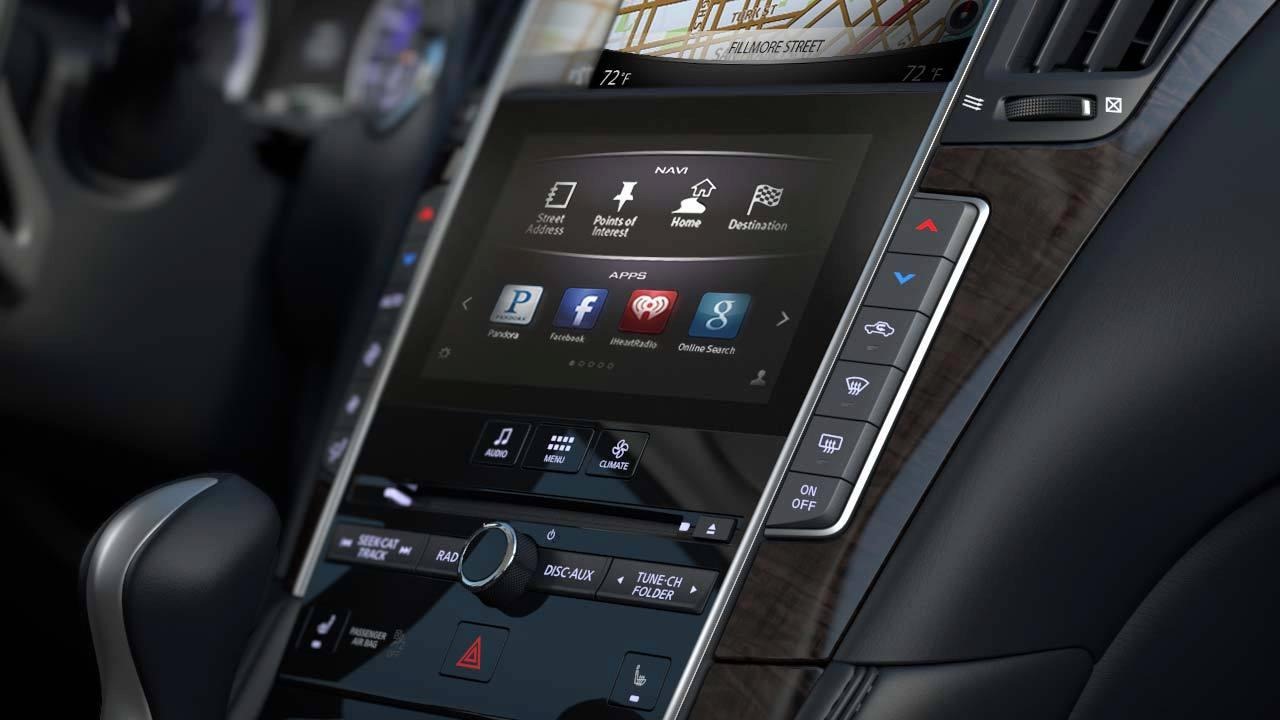
De todas formas, está claro que los de marketing bien saben lo que se vende: pantallas de muchas pulgadas, conectividad, luces varias, confort. Es convertir el coche en la prolongación del salón de tu casa.
http://lh6.ggpht.com/-W0_StSGAiOU/UPQvg75m58I/AAAAAAALHg0/5zA3__qv9ms/s1600/Infiniti-Q50_4%25255B2%25255D.jpg

http://lh5.ggpht.com/-F85sdS6DXsE/UPQvkIJUc4I/AAAAAAALHhU/JFLu2Q6xZAI/s1600/Infiniti-Q50_5%25255B2%25255D.jpg

http://lh4.ggpht.com/-YY54MNO9lHk/UPQvh9pQ1eI/AAAAAAALHhE/zKf8fSCI__U/s1600/Infiniti-Q50_2%25255B2%25255D.jpg
http://lh4.ggpht.com/-fVqdxClGj-E/UPQvfeAq4LI/AAAAAAALHgk/CZMDB-Iu4Ag/s1600/Infiniti-Q50_6%25255B2%25255D.jpg
http://lh4.ggpht.com/-8R78HCJrQ78/UPQveaamrjI/AAAAAAALHgU/TjEy98W2roo/s1600/Infiniti-Q50_1%25255B2%25255D.jpg
http://lh5.ggpht.com/-fykCl4uGevM/UPQvdPSA5NI/AAAAAAALHgE/OpZBvXttsHA/s1600/Infiniti-Q50_3%25255B2%25255D.jpg http://carscoop.blogspot.com/2013/01/infiniti-introduces-new-2014-q50-sedan.html Atentos a esto, reconocimiento de usuario y sus parámetros a través del teléfono, y sincronización de tareas.
MI tarea en un coche es conducir y disfrutar al volante.
::) Al final los coches van a ser Ipad o Tablet con ruedas.
Y si compartes el coche con tu mujer, marido, hijos, ¿no te gusta el tema de definir paramétros incluso relativos a la conduccción para cada usuario?
CABO, me sorprende que tú, un defensor ferviente de la simpleza técnica y siempre crítico con las pijadas, destaque este nuevo equipamiento.
Honestamente, lo veo una tontería. Más allá de la memoria del asiento, uno no tiene definido unos parámetros definidos ni de temperatura del climatizador, ni de parámetros del coche… se supone que la gracia de las «ruletitas» que manejan parámetros del coche es poder cambiarlos, no? Para qué tenerlos fijos? Claro que todo el mundo tiene unas preferencias y que el 90% del tiempo el coche no se moverá de ahí, pero vamos, que no tardas mucho en cambiarlos si no están a tu gusto.
Opino como
RadiK-Alfa: una pijotada que queda muy bien en el concesionario, pero que no viene a paliar ninguna necesidad real.
CABO, me sorprende que tú, un defensor ferviente de la simpleza técnica y siempre crítico con las pijadas, destaque este nuevo equipamiento.Honestamente, lo veo una tontería. Más allá de la memoria del asiento, uno no tiene definido unos parámetros definidos ni de temperatura del climatizador, ni de parámetros del coche… se supone que la gracia de las «ruletitas» que manejan parámetros del coche es poder cambiarlos, no? Para qué tenerlos fijos? Claro que todo el mundo tiene unas preferencias y que el 90% del tiempo el coche no se moverá de ahí, pero vamos, que no tardas mucho en cambiarlos si no están a tu gusto.
Opino como
RadiK-Alfa: una pijotada que queda muy bien en el concesionario, pero que no viene a paliar ninguna necesidad real. La simpleza técnica la defiendo en coches sencillos, dónde es preferible que cueste menos a que tenga ésto y mil otras tontadas, pero llegados a un nivel de precios en el que los posibles problemas no perturben la paz de la cartera del consumidor (Todas estas cosas cuando se averían son muy caras) veo bien que haya pijotadas de éstas que animen la cosa. Y el hecho de que un coche compartido sepa amoldarse al conductor (colocación de volante, pedales, espejos, tacto del acerador y dirección) antes de que éste se siente dentro me parece muy útil y una pasada.
Modo Tali ON: Además en este caso la electrónica es japonesa, nada que ver.
a mí me parece reinventar la rueda. si quieres que la pantalla de tu coche funcione como un iPad, pues haz que no tenga pantalla sino dock para iPad y punto. O al menos ponle Android. nadie se va a poner a desarrollar apps para coches. y lo de los «perfiles» con configuraciones personales y eso… bueno, no está mal siempre que no dé por saco y te quite el control de las cosas. al final un 90% de la gente no lo va a configurar, así que realmente tampoco es muy importante.
Cabo, y si lo llevase un Mercedes o un VW, que dirias? Mode tali ON: la electronica a la que haces referencia es la de los pedales de acelerador made in toyota?
😉 Cabo, y si lo llevase un Mercedes o un VW, que dirias?
Mode tali ON: la electronica a la que haces referencia es la de los pedales de acelerador made in toyota?
😉 Me fio menos la verdad, como seguramente tú te fíes menos si la llevase un Peugeot o un Opel.
Modo Tali ON: Los pedales no eran made in Toyota y no era un problema eléctronico. Aunque se diga que no, los coches japoneses «de verdad» son los «made in Japan».
a mí me parece reinventar la rueda. si quieres que la pantalla de tu coche funcione como un iPad, pues haz que no tenga pantalla sino dock para iPad y punto. O al menos ponle Android. nadie se va a poner a desarrollar apps para coches.
y lo de los «perfiles» con configuraciones personales y eso… bueno, no está mal siempre que no dé por saco y te quite el control de las cosas. al final un 90% de la gente no lo va a configurar, así que realmente tampoco es muy importante.
A lo mejor es Android, en los mapas sale que son de google, no se.
Tanto que se preocupan en desarrollar en seguridad y le ponen Facebook al coche? no entiendo. El morro es lo que más me gusta,
Cabo, y si lo llevase un Mercedes o un VW, que dirias?
Mode tali ON: la electronica a la que haces referencia es la de los pedales de acelerador made in toyota?
😉 Me fio menos la verdad, como seguramente tú te fíes menos si la llevase un Peugeot o un Opel.
Modo Tali ON: Los pedales no eran made in Toyota y no era un problema eléctronico. Aunque se diga que no, los coches japoneses «de verdad» son los «made in Japan».
Yo no hablo de fiarme, hablo del concepto. Y el concepto me pareceria igual de chorra aqui, en Mercedes o en Opel, intento ser consecuente.
Modo Tali ON: el pedal no era de Toyota, pero paso sus controles de calidad. Con esa misma reduccion al absurto, los caudalimetros no eran de VW sino de Bosch.
Datos, datos y mas datos 😀
Sacados de la web oficial de EE.UU.. En inglés[size size=150]DETALLES[/size]
2014 Infiniti Q50 At A Glance
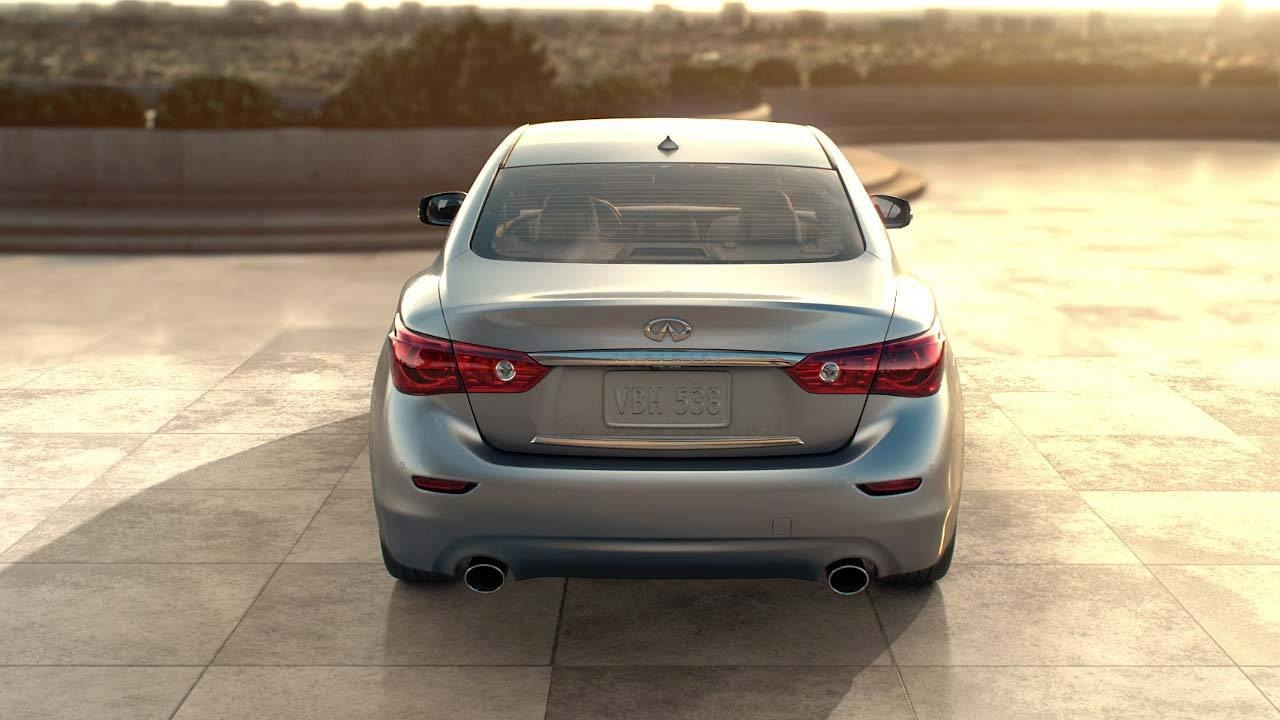
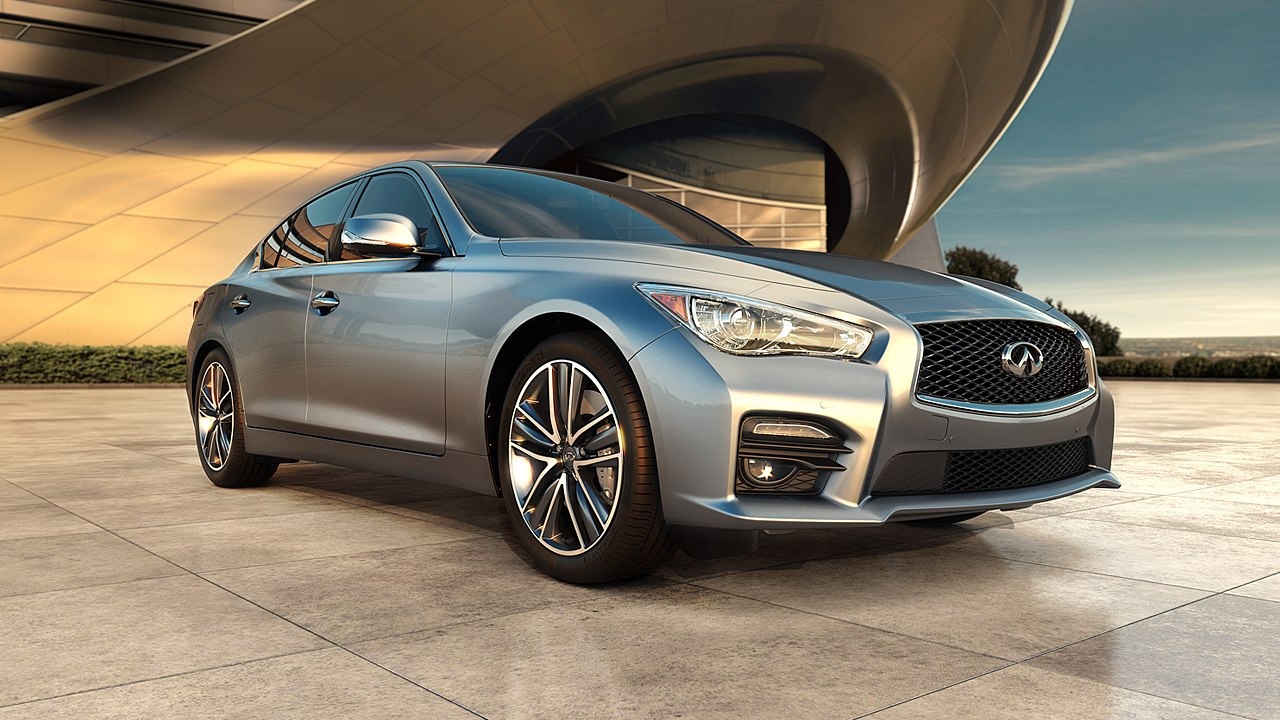
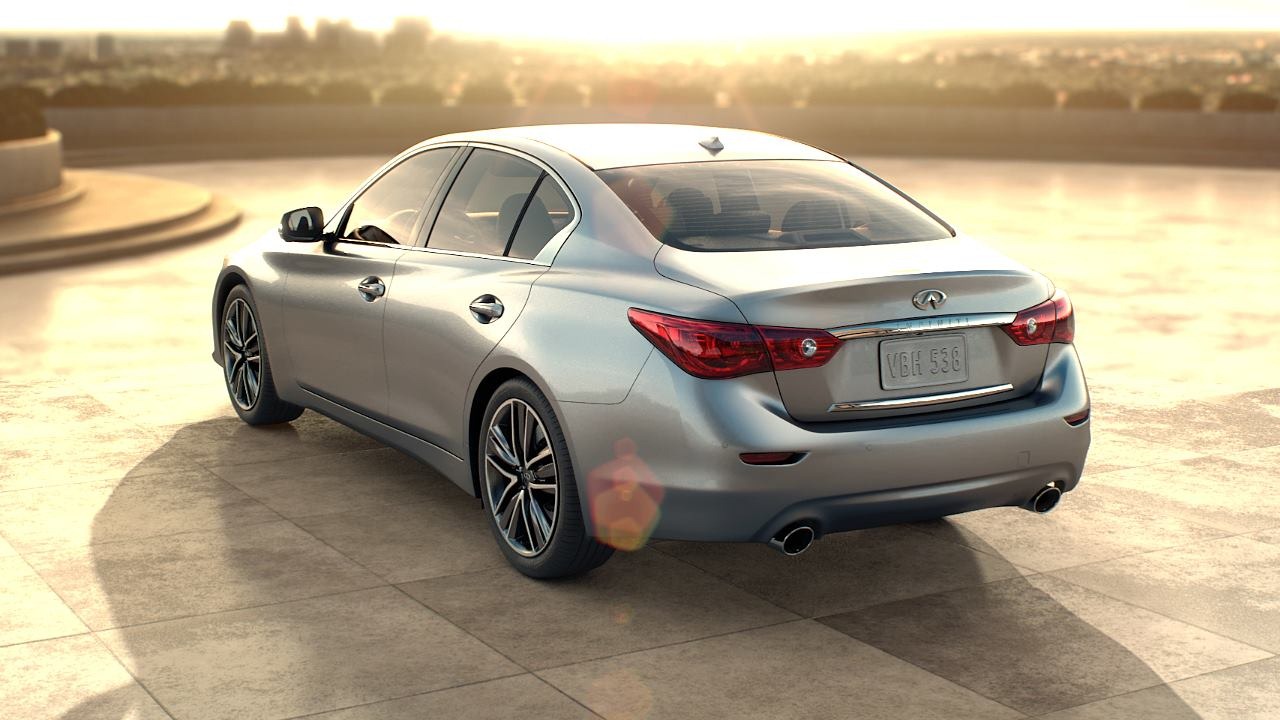
The 2014 Infiniti Q50 sports sedan brings distinctive design, engaging performance, world’s first technologies and unmatched levels of connectivity and personalization to the roads of North America when it goes on sale in summer 2013. The all-new Q50 is designed for a new generation of young, premium customers seeking Infiniti’s unique fusion of inspired performance and hospitality.Taking many of its seductive styling cues from the Infiniti Essence concept, the Q50’s tight, athletic appearance blends low, wide proportions with excellent interior roominess to a class marked by unexciting design.
Inside, the Q50 interior offers a driver-centric cockpit with an array of premium comfort and convenience features. The new Infiniti InTouch™ communications system includes large dual touch-screen displays and puts communication with the outside world within easy reach, with integration of hands-free phone, moving map navigation, entertainment and smart phone apps in a way that is safe and easy-to-use while driving.
Infiniti’s sports sedan performance leadership continues with the new Q50, which is available with a choice of a refined 328-horsepower (est.) 3.7-liter V6 or new Q50 Hybrid featuring Infiniti’s Direct Response Hybrid System™ with Intelligent Dual Clutch Control. All models come equipped with a refined 7-speed automatic transmission with available solid magnesium paddle shifters. The Infiniti Drive Mode Selector with Snow, Eco, Standard, Sport and Custom settings is also standard on all models, part of the advanced customizable digital environment system that allows drivers to create unique settings for engine, transmission, handling and steering settings.
Two new world’s first production performance technologies make their debuts in the Q50 – Infiniti Direct Adaptive Steering™ technology and Active Lane Control™. The new steering system allows advanced control of the Q50’s tire angle and steering inputs, transmitting the driver’s intentions to the wheels faster than a mechanical system. Four different steering settings are offered, allowing customization by driver preference or road conditions. The Active Lane Control™ uses a camera-based lane marker detection system to further enhance on-center driving capability and improve vehicle straightability.
The 2014 Infiniti Q50 3.7-liter V6 and 3.5-liter Hybrid models will be available with a choice of rear-wheel drive or Intelligent All-Wheel Drive, and in a range of well-equipped models, including versions with special sport appearance and performance features with sport brakes and sport suspension tuning.
Highlights of the 2014 Infiniti Q50 include:
Design
– Sensuous dynamic styling with unexpected spaciousness
– Low, wide proportions and tight, athletic stance
– Infiniti signature “double arch” front grille, dynamic arch silhouette and Crescent-cut C-pillar
– Distinctive LED head lamps and lighting (headlights, fog lights and marker lights), LED rear combination lamps
– Available Adaptive Front lighting System (AFS) with High Beam Assist
– Available sport front fascia
– Available power sliding and tilting tinted glass sunroof with one-touch open/close and sliding sunshade
– Heated outside mirrors with integrated LED turn signals, available auto dimming outside mirrors with reverse synchronization mirror angle
– Body-color outside door handles with chrome accents
– Dual chrome exhaust finishers
– Eight available premium exterior colors
– Advanced aerodynamic design with 0.26 coefficient of drag and zero front and rear lift conceptPerformance
– Front engine/rear-wheel drive or Intelligent All-Wheel Drive
– 3.7-liter aluminum-alloy DOHC 24-valve V6, rated at 328 horsepower (est.) and 269 lb-ft of torque (est.), featuring Continuously Variable Valve Timing Control (CVTCS) and Variable Valve Event & Lift (VVEL®)
– Infiniti Direct Response Hybrid™ with intelligent dual clutch control, combining 3.5-liter 24-valve DOHC aluminum-alloy V6 and compact laminated lithium-ion battery design with an innovative one-motor/two-clutch motor control; V6 rated at 296 horsepower (est.) and 255 lb-ft of torque (est.), advanced 50 kW electric motor rated at 67 horsepower (est.) and 199 lb-ft of torque (est.), Hybrid system net power: 354 horsepower (est.)
– 7-speed electronically controlled automatic transmission with Downshift Rev Matching and manual shift mode, Adaptive Shift Control
– Available steering column-mounted magnesium paddle shifters
– Drive mode selector switch (Sport, Standard, ECO, Snow, Custom settings)
– 4-wheel independent multi-link suspension (front single pivot double-wishbone design/revised rear design) with extensive use of lightweight aluminum components and front and rear stabilizer bars
– Available sport-tuned suspension
– Power-assisted vehicle-speed-sensitive rack-and-pinion steering
– Available Direct Adaptive Steering™ technology for enhanced steering feel and personalized selection of steering effort and gear ratio
– 4-wheel power-assisted vented disc brakes, 4-wheel Anti-lock Braking System (ABS), Electronic Brake force Distribution, Brake Assist
– Available Sport Brakes with upgraded rotors, 4-piston front calipers and 2-piston rear calipers
– 17-inch aluminum-alloy wheels with machine-finished surface, 225/55R17 all-season run-flat tires
– Available 19-inch aluminum-alloy sport wheels with 245/40R19 all-season or summer run-flat tires
– Advanced Vehicle Dynamic Control with Active Trace Control for dynamic cornering ability
– Active Lane Control™ (utilizing world’s first Direct Adaptive Steering technology)
– Tire-specific Tire Pressure Monitoring System (TPMS)Hospitality
– Driver-oriented layout and a console with warm, asymmetric design
– Ample knee, head and shoulder roominess
– Easy rear ingress/egress provided by wide rear door openings
– Natural contour ergonomic-design front seats for enhanced comfort
– Premium leatherette seating surfaces with embroidered Infiniti logo
– Available leather-appointed seating
– 8-way power-adjustable driver’s seat with manual lumbar support, 8-way power-adjustable front passenger seat
– 60/40 split rear seat, rear center armrest with trunk pass-through
– Available sport-type leather-appointed seats, manual thigh extensions (driver and front passenger)
– Available power torso bolsters (driver’s side)
– Available heated front seats and heated steering wheel
– Fine Vision electroluminescent instrumentation
– Kacchu aluminum interior trim on center console, instrument panel and doors
– Available Fukiurushi maple wood trim
– Available aluminum-accented pedals (standard on sports grades)
– Next-generation Studio on Wheels by Bose® audio system with instrument panel three-speaker array (up to 14 total speakers), Advanced Staging Technology®
– Voice Recognition for audio, navigation, SMS
– Dual-Zone Automatic Temperature Control
– Available advanced Climate Control System (ACCS) with Plasmacluster® air purifier
– Infiniti Intelligent Key with Push Button Ignition, touch unlock door function
– Customizable digital environment for storing and providing various driver settings and driving characteristics to i-Key
– Power front and rear windows with illuminated switches and one-touch auto up/down feature
– Rear passenger personal lamps
– RearView Monitor
– Around View® Monitor (AVM) with Moving Object Detection (MOD)
– HEV sound management technologies, including available Active Noise Control (ANC)I
nfiniti InTouch™
– Infiniti InTouch™ next-generation Human Machine Interface (HMI) with dual touchscreen displays and smart phone connectivity
– SiriusXM Satellite Radio (SiriusXM subscription required, sold separately), High Definition (HD) radio
– Available navigation system with NavTraffic with Real-Time Traffic Information and NavWeather with Real-Time Weather and 5-day forecast (SiriusXM subscription required, sold separately)
– Infiniti Connection™ with Automatic Collision Notification, Destination Assistance and Drive Zone Monitoring
– Bluetooth® Hands-free Phone System and Streaming Audio via Bluetooth®
– Voice Recognition for audio, navigation, SMS
– Fully customizable digital environment for storing and providing various driver settings and driving characteristics to i-KeySafety Shield Technologies
– Infiniti Advanced Air Bag System (AABS) with dual-stage supplemental front air bags with seat belt sensors and occupant classification sensor
– Front seat-mounted side impact supplemental air bags
– Roof-mounted curtain side impact supplemental air bags for front- and rear-seat outboard occupant head protection
– Available front seat driver/passenger Pre-Crash Seat Belts
– Available Safety Shield Technologies with Intelligent Cruise Control (ICC) with full speed range, predictive Forward Collision Warning, Forward Emergency Braking, Distance Control Assist, Blind Spot Intervention®, Back-up Collision Intervention, Lane Departure Prevention and Active Lane Control™ (utilizing world’s first production Direct Active Steering technology)
– Traction control system (integrated with Vehicle Dynamic Control)
– High Beam AssistAvailability
– Available in a range of premium and sport rear-wheel and all-wheel drive models
– Initially offered with choice of 3.7-liter V6 or 3.5-liter Infiniti Direct Response Hybrid™, each with 7-speed automatic transmission
– Other powertrains to be added as part of global market launch rollout
– On sale in the United States and Canada in summer 2013
– Sales in other major global markets begin in summer 2013[size size=150]ESPECIFICACIONES[/size] 2014 Infiniti Q50 Key Dimensions and Specifications
Engines:
3.7-liter aluminum-alloy DOHC 24-valve V6, rated at 328 horsepower (est.) and 269 lb-ft of torque (est.), featuring Continuously Variable Valve Timing Control System (CVTCS) and Variable Valve Event & Lift (VVEL®)
Infiniti Direct Response Hybrid™ with Intelligent Dual Clutch Control, combining 3.5-liter 24-valve DOHC aluminum-alloy V6 and compact laminated lithium-ion battery design with an innovative one-motor/two-clutch motor control; V6 rated at 296 horsepower (est.) and 255 lb-ft of torque (est.), advanced 50 kW electric motor rated at 67 horsepower (est.) and 199 lb-ft of torque (est.), Hybrid system net power: 354 horsepower (est.)Transmission: 7-speed electronically controlled automatic transmission with Downshift Rev Matching, manual shift mode and Adaptive Shift Control, available steering column-mounted magnesium paddle shifters
Drive Configuration: Front engine, rear-wheel drive or Intelligent All-Wheel DriveWheels/Tires: 17-inch aluminum-alloy wheels with machine-finished surface / 225/55R17 all-season run-flat tires
Available 19-inch aluminum-alloy sport wheels / 245/40R19 all-season or summer run-flat tires
Suspension: 4-wheel independent multi-link suspension (front single pivot double-wishbone design/revised rear design) with extensive use of lightweight aluminum components and front and rear stabilizer bars
Braking:4-wheel power-assisted vented disc brakes, 4-wheel Anti-lock Braking System (ABS), Electronic Brake force Distribution, Brake Assist
Available Sport Brakes with upgraded rotors, 4-piston front calipers and 2-piston rear calipersSteering: Vehicle-speed-sensitive power steering
Available Direct Adaptive Steering™ technology for enhanced steering feel and personalized dynamic customization
Wheelbase: 112.2 inches
Length: 188.3 inches
Width: 71.8 inches
Height: 56.8 inches
Coefficient of drag: 0.26
Seating Capacity: 5-passenger
Exterior Features: Sensuous dynamic styling with unexpected spaciousness; purpose-built for performance with low, wide proportions and tight, athletic stance; Infiniti signature «double arch» front grille, dynamic arch silhouette and Crescent-cut C-pillar; distinctive LED head lamps and lighting (headlights, fog lights and marker lights), LED rear combination lights; available sport front fascia; eight available premium exterior colors; advanced aerodynamic design with 0.26 coefficient of drag and zero front and rear lift
Interior Features: Driver-oriented center stack/console with asymmetric design; natural contour ergonomic-design front seats for enhanced comfort; available leather-appointed seating; available heated front seats and heated steering wheel; Fine Vision electroluminescent instrumentation; «Kacchu» aluminum interior trim; available «Fukiurushi» maple wood trim; Dual-Zone Automatic Temperature Control, available Advanced Climate Control System (ACCS) with Plasmacluster® air purifier; customizable digital environment for storing and providing various driver settings and driving characteristics to i-Key; Bluetooth® Hands-free Phone System; RearView Monitor
Technology Features:Infiniti InTouch™ next-generation Human Machine Interface with dual touch-screen displays and smartphone connectivity; next-generation Studio on Wheels by Bose® audio system with instrument panel speaker array and up to 14 total speakers, Advanced Staging Technology®; Around View® Monitor with Moving Object Detection; HEV sound management technologies, including available Active Noise Control
Infiniti Connection™ featuring Automatic Collision Notification, Drive Zone monitoring, Google Calendar™, and Destination Assistance via Infiniti Personal Assistant (complimentary for the first 12 months of ownership)
Available Safety Shield technologies with Intelligent Cruise Control with Full Speed Range, predictive Forward Collision Warning, Forward Emergency Braking, Distance Control Assist, Blind Spot Intervention®, Back-up Collision Intervention, Lane Departure Prevention, Active Lane Control™ (world’s first production Direct Adaptive Steering technology), High Beam Assist
Available dynamic performance enhancement systems, including Active Trace Control by advanced Vehicle Dynamic Control
A ver con qué motores viene a España, como sólo salga con motores altos van a vender 1 o ninguno A ver con qué motores viene a España, como sólo salga con motores altos van a vender 1 o ninguno
No, llegará con motores de 4 cilindros de Mercedes. Acuerdate que en el hilo de espias cargargui comentó que la mula salia de un complejo de Mercedes sonando a diesel😉 A ver con qué motores viene a España, como sólo salga con motores altos van a vender 1 o ninguno
No, llegará con motores de 4 cilindros de Mercedes. Acuerdate que en el hilo de espias cargargui comentó que la mula salia de un complejo de Mercedes sonando a diesel😉 ¡Cierto! Gracias por el recordatorio
😉
CABO, me sorprende que tú, un defensor ferviente de la simpleza técnica y siempre crítico con las pijadas, destaque este nuevo equipamiento.Honestamente, lo veo una tontería. Más allá de la memoria del asiento, uno no tiene definido unos parámetros definidos ni de temperatura del climatizador, ni de parámetros del coche… se supone que la gracia de las «ruletitas» que manejan parámetros del coche es poder cambiarlos, no? Para qué tenerlos fijos? Claro que todo el mundo tiene unas preferencias y que el 90% del tiempo el coche no se moverá de ahí, pero vamos, que no tardas mucho en cambiarlos si no están a tu gusto.
Opino como
RadiK-Alfa: una pijotada que queda muy bien en el concesionario, pero que no viene a paliar ninguna necesidad real. La simpleza técnica la defiendo en coches sencillos, dónde es preferible que cueste menos a que tenga ésto y mil otras tontadas, pero llegados a un nivel de precios en el que los posibles problemas no perturben la paz de la cartera del consumidor (Todas estas cosas cuando se averían son muy caras) veo bien que haya pijotadas de éstas que animen la cosa. Y el hecho de que un coche compartido sepa amoldarse al conductor
(colocación de volante, pedales, espejos,tacto del acerador y dirección) antes de que éste se siente dentro me parece muy útil y una pasada. Modo Tali ON: Además en este caso la electrónica es japonesa, nada que ver.
Eso se llama asientos con memoria, y están inventados desde hace mucho tiempo ya, y es realmente lo único que es un coñazo ajustar.
Lo del tacto del acelerador y dirección, vale, está ahí, bien. Pero lo veo inútil. El que se pare a configurar el «i-Key» será lo suficientemente friki para saber ajustar con un par de pulsaciones esos dos parámtros. Y quien no se preocupe por configurar los perfiles, probablemente conducirá el coche «segun le viene».
Hablo desde la experiencia: el iDrive de BMW tiene una función de perfiles de usuario muy similar a esto, que no afecta a parámetros de conducción, eso sí. Guarda emisoras de radio, botones de favoritos… El sistema puede guardar hasta 3 perfiles, y cada llave «recuerda» el último perfil que ha estado activo con ella siendo usada.
Solo sé que en casa tenemos 2 llaves, que siempre usamos la misma y que la otra está «para por si acaso», y que los dos conductores habituales la única preocupación que tienen al montar en el coche es pulsar su botón de memoria del asiento; nada de configurar su conjunto de emisoras de radio favoritas.
Eso se llama asientos con memoria, y están inventados desde hace mucho tiempo ya, y es realmente lo único que es un coñazo ajustar.
Lo del tacto del acelerador y dirección, vale, está ahí, bien. Pero lo veo inútil. El que se pare a configurar el «i-Key» será lo suficientemente friki para saber ajustar con un par de pulsaciones esos dos parámtros. Y quien no se preocupe por configurar los perfiles, probablemente conducirá el coche «segun le viene».
Hablo desde la experiencia: el iDrive de BMW tiene una función de perfiles de usuario muy similar a esto, que no afecta a parámetros de conducción, eso sí. Guarda emisoras de radio, botones de favoritos… El sistema puede guardar hasta 3 perfiles, y cada llave «recuerda» el último perfil que ha estado activo con ella siendo usada.
Solo sé que en casa tenemos 2 llaves, que siempre usamos la misma y que la otra está «para por si acaso», y que los dos conductores habituales la única preocupación que tienen al montar en el coche es pulsar su botón de memoria del asiento; nada de configurar su conjunto de emisoras de radio favoritas.
Vamos a ver, asientos con memoria es eso, asientos con memoria. Este coche configura asientos, pedales, volante, espejos, tacto de acelerador, tarado del ESP, y vete a saber que más. A mi se me ocurre que también las emisoras favoritas, el volumen al que lo pones, la temperatura del climatizador, y chuminadas varias, como tus aplicaciones favoritas, si quieres que la voz del navegador sea hombre o mujer… Y es que no solo hace todo eso, sino que cuando subes al coche ya está listo para tí.
Esta claro que si es un solo conductor es un sistema que no se usa, pero si hay varios es un avance tecnológico reseñable.
un avance tecnológico del que la mayoría de compradores pasará olímpicamente. no sé qué perfil de persona compra estos Infiniti, pero si es similar al de BMW o Mercedes dudo que eso le importe a nadie. fijaos en los iphones… cacharros de 700 euros que pueden hacer mil cosas y casi todo quisqui usa para whatsapp, facebook y poco más.
un avance tecnológico del que la mayoría de compradores pasará olímpicamente. no sé qué perfil de persona compra estos Infiniti, pero si es similar al de BMW o Mercedes dudo que eso le importe a nadie.
fijaos en los iphones… cacharros de 700 euros que pueden hacer mil cosas y casi todo quisqui usa para whatsapp, facebook y poco más.
Pues seguramente, pero si pasan de usarlo cuando lo tienen todo hecho a un toque de botón del teléfono imagínate en los coches en los que tienes que meterte en unos menús cada vez que lo quieras cambiar o activar (tacto de la dirección o del Esp por ejemplo). Yo me imagino que para alguien ya mayor se lo configurarán según los gustos de los usuarios en el mismo concesionario.
Yo la verdad que no lo veo una chorrada tecnológica como hay muchas. Vamos a imaginar un caso. Al Don le gusta conducir y configura su BMW para tener una respuesta rápida de la dirección-cambio y un ESP permisivo. Un día coge el coche la señora (después de sentarse y apretar el botón del asiento con memoria, y ajustar manualmente los espejos y la columan de dirección) llueve y se sale en la primera rotonda.
montará el 2.1 CDI con 170cv y 400Nm
0-100km/h: 9 seg
vel. Max: 230 km/h
Consumo medio: 4.4 L/100km y menos de 115gr de CO2Transmisión: manual de 6 vel y automatica de 7
http://www.autowereld.com/autonieuws/detail.asp?artikel=16883 montará el 2.1 CDI con 170cv y 400Nm
0-100km/h: 9 seg
vel. Max: 230 km/h
Consumo medio: 4.4 L/100km y menos de 115gr de CO2Transmisión: manual de 6 vel y automatica de 7
http://www.autowereld.com/autonieuws/detail.asp?artikel=16883 Que menos que el 2.2cdi de 204 cv.
😀 Pues si, porque de momento no hablan de mas motores y claro, en Europa, saltar de 170 a 330cv es una burrada
Yo espero que pongan, mas adelante, algo mas, de 4 cilindros Mercedes claro. LA versión de 204cv como bien comentas y el gasolina 2.0T de 211
Yo creo que asi la gama quedaria bien hecha, porque es que 330cv para empezas en gasolina me parece demasiado[url url=http://www.infinitipress.eu/en-eur/Infiniti/Press-Releases/INFINITI-Q50–A-NEW-MODEL-A-NEW-NAME-A-NEW-ENGINE-AND-A-NEW-CHAPTER-BEGINS-FOR-INFINITI-IN-EUROPE1/]Nota de prensa[/url]
OVERVIEW:
SEDUCTIVE DESIGN, AGILE PERFORMANCE, INTUITIVE TECHNOLOGYThe first of a new-generation of premium Infiniti models, the Q50 is Infiniti’s most significant car yet for the European marketplace. Marking the debut of the new Infiniti Q naming structure, the Q50 is designed, engineered, equipped and built to compete at the highest level in the premium D-segment.
With its low and wide proportions and athletic, flowing form the Infiniti Q50 brings a new level of emotional design to the BMW 3-series/Audi A4 class – a fresh face whose self-confidence is summed up by its striking new human-eye like headlights and distinctive ‘double arch’ grille. Other design features, inspired by Infiniti’s trilogy of concept cars – Essence, Etherea and Emerg-e – go hand-in-hand with an interior that offers unexpectedly spacious accommodation for this class.
The Infiniti Q50 is the first Infiniti to benefit from the brand’s collaboration agreement with Daimler AG. The 2.2-litre direct-injection four-cylinder turbo-diesel engine has been modified by the Infiniti engineering teams to ensure engine response is in line with Infiniti’s emphasis on performance. The engine offers power and torque whilst retaining a low CO2 output (under 115g/km) which positions the Q50 at the centre of the premium saloon market in Europe – as well as guaranteeing the dynamic drive Infiniti owners expect. Like the engine, both available transmissions – a 6-speed manual and 7-speed automatic – have been tailored to Infiniti’s specific requirements.
The second version of the Q50 for Europe is the Q50 3.5 Direct Response Hybrid whose accelerative ability will guarantee it a place in the top echelons of European high performance sports saloons. With 0-100km/h estimated to be well under 5.5 seconds it is likely even to topple its big brother, the Infiniti M35h, which is currently listed in Guinness World Records as the world’s fastest accelerating hybrid car.
The 364PS Q50 3.5 Hybrid shares the same intelligent dual-clutch Direct Response Hybrid system and 7-speed automatic transmission as the M35h, but with changes to improve performance, extend its electric-only range and allow for an outstanding cargo capacity for a hybrid in this class.
In characteristic no-compromise Infiniti manner, the performance is matched by a remarkable level of efficiency – with fuel consumption on the combined cycle estimated to be 6.2 l/100km (45mpg) and CO2 emissions under 145g/km. The Q50 3.5 Hybrid will be available in both rear and all-wheel drive forms in Europe.
The dynamic performance offered by every Infiniti Q50 is enhanced with the availability of Direct Adaptive Steering – a world-first technology that provides faster steering response and greater precision with an unrivalled scope for driver customisation. Direct Adaptive Steering can be configured easily for both steering effort and gearing, ensuring steering response is always in tune with driving style and type of road. The system is overseen by three separate control units and works in parallel with the mechanical steering linkage for failsafe reliability in all situations.
Infiniti’s reputation as a technology leader is reinforced in the Q50 with the world’s most advanced lane departure prevention technology yet, Active Lane Control. The newest addition to Infiniti’s all-encompassing Safety Shield technology, Active Lane Control is unique in using the steering (rather than the brakes) to encourage the car to stay between the lane markings on the motorway – an effect described as being “magnetized to within its lane”, making driving less tiring on long journeys.
Like all Infiniti technologies, Direct Adaptive Steering and Active Lane Control have been developed to seamlessly and unobtrusively support the driver rather than isolate them.
The Infiniti Q50 offers a new-generation digital environment designed for maximum customization and ease of use. Up to 96 vehicle parameters can stored on the i-Key for up to four different drivers, making the Q50 not just one of the most configurable cars in the class but also one that offers a very real sense of “my car knows me”.
Infiniti InTouch™, Infiniti’s next-generation communications technology, makes its debut on the Q50. Dual touch-screens, a first in the class, de-clutter the control layout and ensure totally intuitive operation of all functions, features and custom apps.
The Q50’s interior has an emphasis on natural elegance, spacious rear passenger accommodation and the signature craftsmanship, attention to detail and premium materials that set every Infiniti apart. In the design, there is a clear focus on the driver. Comfort was a particular focus and in the search for a new type of comfortable seat came from NASA research into the neutral posture the body adopts in a zero gravity environment. The Q50’s comfort seats are designed to offer maximum spinal support and thus reduce fatigue on long drives.
The Q50 is the first model to feature Infiniti’s new naming strategy that will see all models bear either a Q or (for the crossovers) QX badge. The change recalls iconic Q models of Infiniti’s past and offers a clear and logical naming platform into which all existing and future Infiniti models will fit, with the double digit number signifying the area of the market where the car competes.
The Infiniti Q50 makes its European debut at the Geneva Motor Show in 2013 – in the same halls that in previous years saw its concept car forebears unveiled –following its world reveal at NAIAS in Detroit two months before. The Q50 in both diesel and hybrid forms will go on sale across Europe from autumn 2013 (depending on country) in a range of standard and Sport models all designed to offer maximum choice and flexibility for both private and fleet customers.

http://www.infinitipress.eu/Global/General/Corporate/Image-Packs/Tables/EU_table1_04.png

http://www.infinitipress.eu/Global/General/Corporate/Image-Packs/Tables/EU_table2_04.png THE INFINITI Q50 IN DETAIL
1. SEDUCTIVE DESIGN
Infiniti follows no one on design and the Q50 capitalises on this with a sensuously flowing shape that is elegant, warm and emotionally appealing while offering all the discreet muscularity for which Infiniti models are known. The headlights add a lifelike quality and define a face which is quite distinct from that of its German rivals.
Inspiration for the design comes from Infiniti’s sports saloon past but chiefly from the trio of exceptional concept cars (Essence 2009, Etherea 2011, Emerg-e 2012) that together encapsulate the Infiniti design DNA so successfully advanced by Infiniti Chief Creative Office, Shiro Nakamura.
On the longest wheelbase in the class, the Q50 has a natural size advantage over rivals. However it is the car’s proportions that do most to provide its signature sporting stance. The Q50 is notably low and wide. It appears planted on the road, and with its taut lines, strong shoulders and arching roofline makes an unmistakably powerful impression. Rarely has a car looked as eager to pounce while maintaining such dignified elegance, perfectly expressed by the crescent-cut C-pillar – a design USP that ensures the Q50 will always be instantly identifiable.
The front of the car is characterised by a new and more three-dimensional mesh grille, framed by the distinctive ‘double arch’ chrome surround used on all Infiniti models. Strong crease lines flow from the bottom of the A-pillars down the bonnet sides to seamlessly connect with the grille sides in a distinctive sweep. The hooded lights appear as eyes, offering another unique Q50 signature, day or night. A similar visual light signature is repeated at the rear of the car. The indicator lights and front fog lights are all LED units, while the headlights come either as halogen or with full LED technology, available with Infiniti Adaptive Front Lighting System (AFS) as well as Automatic High/Low beam control.
Sport versions get a reprofiled front bumper section and machine-finished 19-inch alloy wheels. Standard Q50s are equipped with 17-inch wheels, while 18-inch and 19-inch are available according to the grades. Some versions of the Q50 have been designed to work with third-generation run-flat tyres for the convenience and safety of owners.
The Q50’s shape is aerodynamic as well as seductive, with the zero lift concept body achieving an excellent Cd of 0.26 in standard form. Eight exterior colours will be available including two developed exclusively for the Q50 range: Hagane Brown and Hagane Blue.Powerful looks, powerful platform
The powerful looks are based on an equally powerful platform, a bespoke version of Infiniti’s latest chassis technology. Double wishbone front suspension and multilink rear (with Dual Flow Path shock absorbers) guarantee handling poise and precision whilst improving ride comfort. Handling is further enhanced by a stiffer body structure and lower body weight.Sport versions get sports-tuned suspension with double piston shock absorbers as well as upgraded brake rotors with 4-piston front calipers and 2-piston rear. As part of an overall performance and handling assessment, they have been tested by Infiniti Red Bull Racing’s three times Formula One World Champion Sebastian Vettel at the Tochigi test track in Japan and by RBR test driver Sebastien Buemi at the infamous Nordschleife – one of the toughest proving grounds in the world.
Ultra High Tensile Strength Steel – a weight-saving first
In keeping with the raft of technological firsts, the Q50 also features extensive use of 1.2GPa Ultra High Tensile Strength Steel with High Formability.The Q50 features 13 different parts of the upper-body section constructed from this High Tensile steel, including the A pillars, B pillars and roof rails. This is a world-first for production vehicles.
This contributes considerably to weight saving overall helping to improve fuel consumption, whilst making the vehicle structurally stronger and thus improving occupant safety.
One of the characteristics of the newly-developed material is the compatibility of both strength and elongation through micronizing of the material to develop a compound structure where an optimal balance between hard layers and soft layers is obtained instead of a simple structure, which is found in previous super high-tensile materials.
The weight-saving will ultimately lead to less CO2 emission. It underlines Infiniti’s commitment to innovative sustainability.
Interior design: technology in perfect harmony
Harmonious design and surprisingly spacious accommodation come together with Infiniti’s trademark craftsmanship and innovative technologies to make the Q50 cabin a stand-out place to be, for driver or passenger.A dual cockpit feel is achieved by a dashboard that flows around in a subtle “double wave” formation and by an asymmetrical centre section. With soft curves, contrasting surfaces and a precision finish, the design is both welcoming and also driver-centric. All key controls are located to be operated so the driver does not need to change driving posture.
Enhancing the in-command feeling is a control layout that majors on ergonomic human-machine interface. This is in part thanks to the Q50 being one of the first cars to feature dual touch-screens. Each screen can be used to display and control different functions, so while, for example, the top screen shows navigation the lower screen can be used to oversee systems such as climate control, communications or entertainment. The two screens can also work together so while the route is viewed on the top screen places of interest on that route can be searched for on the lower screen. It is all part of Infiniti’s next-generation approach to intuitive technology so evident on the Q50.
With a wheelbase of 2850mm, the Q50 has plenty of room for adult passengers front and back; rear knee room is expected to be best in class. Particular attention has been paid to easy ingress and exit. The rear seat can be split 60/40 for when extra luggage capacity is needed, and there is access to the boot via the centre armrest so that long objects, such as skis, can be carried along with rear seat passengers.
As with any Infiniti there is an emphasis on natural materials inside and leather and maple wood are both available, as well as aluminium with the textured Kacchu finish based on ancient Japanese crafts. The three interior colour ways are Wheat, Graphite and Stone.
Available features on the Q50 include Active Noise Control, a next-generation Studio on Wheels Bose® audio system, Advanced Climate Control System (ACCS) with Plasmacluster® air purifier, and Around View® Monitor with Moving Object Detection.
Seats: inspired by NASA
Infiniti looked to outer space to find the key to developing seats for the Q50 that offer fatigue-free comfort even over long periods. Engineers working alongside researchers at Keio University in Japan were inspired by NASA research that showed the neutral posture the human body adopts in zero gravity situations to impose the least amount of load on the body, allowing for the same posture to be maintained without discomfort for long periods.The front seats in the Q50 are designed to replicate this neutral posture as closely as possible. Their unique design and structure provides continuous support for the spine from the pelvis to the chest, reducing muscular and spinal loads and improving blood flow, thereby reducing fatigue over long distances.
Long-distance comfort may have been the priority but being an Infiniti the seats have to fulfil other criteria as well. They do. Depending on model, the front seats feature eight-way power adjustment, adjustable lumbar support and thigh extensions, and, for models equipped with sports seats, power operated side bolsters. The seats can also be covered in leather and be heated (as can the steering wheel).
2. AGILE PERFORMANCE
The heart of every Infiniti is its engine – for the Q50 like any other Infiniti. The new saloon is available in Europe with either a 2.2-litre four-cylinder diesel engine, boasting an exceptional balance between performance and low emissions (under 115g/km ), or a 3.5-litre V6 petrol/electric hybrid powertrain with the emphasis firmly on high performance – but with surprisingly good CO2 (under 145g/km).
Both engines are true to the Inspired Performance principles required of the brand, but while the hybrid unit is all Infiniti, and as used by the Infiniti M35h, the diesel engine has been developed from the Daimler AG 2.2 diesel unit employed in certain C and E-class Mercedes, and as such is the first result of the component-sharing agreement between the two companies.
Infiniti engineers have made a substantial contribution into the development of this engine for the Q50. Most important is that it feels different, with faster response in keeping with the sportier drive characteristics Infiniti requires. Although power (125kW) and torque (400Nm) are familiar, the manner in which these maxima are achieved is unique to Infiniti. This has been achieved not just by digital remapping but a considerable amount of re-engineering.
Unique Infiniti engine parts include air inlet, intercooler, low-pressure fuel system and after treatment system, oil pan, engine mounts, and engine control unit (ECU). Visible engine items are in addition unique to Infiniti. The block, turbocharger, exhaust and injection system are common with the Mercedes-Benz version.

http://www.infinitipress.eu/Global/General/Corporate/Image-Packs/Tables/EU_table3_04.png The diesel engine is available with a 6-speed manual gearbox or 7-speed automatic, both Daimler units that have been modified to meet Infiniti requirements. The manual shift device is new for the Q50, and puts the emphasis on a smooth, solid shift quality. The automatic transmission’s change-up speeds and kickdown points have been revised to enhance the lively feel and give the car more urgent acceleration.
Performance to rewrite the record books
More Inspired Performance comes with the Q50 3.5 Hybrid. With an estimated 0-100km/h time of under 5.5 seconds it is destined to be among the very fastest cars in the class, but with a lower carbon footprint. It has the same net power (364PS) as the Infiniti M35h with which is shares its drivetrain, but it is odds on to out-accelerate even its potent big brother – the current Guinness World Record-holder as the fastest-accelerating hybrid saloon.The acclaimed Infiniti Direct Response Hybrid system, with its intelligent one motor/dual clutch control, appears in the Q50 in revised form with, among other enhancements, a new electric motor. The changes deliver improvements to response and efficiency as well as further extending the electric range – already one of the most impressive available.
Impressively, the engineers have been able to package the hybrid control hardware and new-for-the-Q50 lithium-ion battery pack in an innovative new way in the rear of the car, allowing for a generous 400 litres trunk capacity.
As with the M35h, the Q50 3.5 Hybrid uses Infiniti’s Adaptive Shift Control 7-speed automatic transmission. It features Downshift Rev Matching and manual shift mode via available steering column-mounted magnesium paddle shifters.
The Infiniti Q50 3.5 Hybrid promises class-leading performance – with the prospect of exceptionally low fuel consumption and CO2 emissions (figures yet to be homologated). The model will be available in Europe in both rear-wheel drive and Intelligent All-Wheel Drive forms, for maximum customer choice.

http://www.infinitipress.eu/Global/General/Corporate/Image-Packs/Tables/EU_table4_04.png Dynamism delivered: the Q50’s world-first technologies
As a company at the forefront of technological innovation, Infiniti is constantly looking for new ways to enhance its cars’ dynamism and boost driving pleasure. The Q50 delivers in style, with the world debut of Direct Adaptive Steering, a core component of the new model’s agile performance.Direct Adaptive Steering is an electronic “by-wire” system that is standard on the Q50 3.5 Hybrid and optional on the Q50 2.2d. Direct Adaptive Steering comes with several advantages: steering response is faster, precision is greater, vibration at the steering wheel is eliminated and, uniquely, the system allows the driver to choose the steering feel they most prefer – not just the weight but also the gearing. Other systems achieve similar results through different means, but none is available in the Q50’s class and none can match the Infiniti’s electronic sophistication.
Steering is simply adjusted on a touch screen as part of the Infiniti Drive Mode Selector. There are two pre-set modes (Sport and Standard) plus a custom mode. In the Standard setting the steering is set for maximum ease of use for all drivers on all roads. Sport mode increases the steering effort and makes the gearing more direct for faster response – ideal for enthusiastic driving on twisting roads.
The Custom mode allows the driver to mix and match effort and gearing to suit individual driving style and type of road. Light and quick, or slow and heavy, the choice is theirs. A Direct Adaptive Steering equipped Q50 can therefore be as secure and stress-free to steer on a motorway as it is reassuring and rewarding to handle on a mountain pass, or as light and easy to manoeuvre in a crowded car park.
Direct Adaptive Steering works by electronically transferring the driver’s input to the front wheels, where a high-response actuator drives the steering rack, eliminating the mechanical losses that can dull the responses in conventional systems. DAS comes with triple-mode back-up (three separate electronic control units), 400,000km of real world test distance behind it and the absolute failsafe of the mechanical steering linkage.
Active Lane Control: tomorrow’s technology today
A further advantage of Direct Adaptive Steering is that it is the power behind Active Lane Control, Infiniti’s breakthrough in lane departure prevention technology. Active Lane Control is the most effective and sophisticated such system yet developed because it is the only one to use the steering to keep the car between lane markings on the motorway. Other systems use the vehicle’s Electronic Stability Program (ESP) to apply braking force on one side of the car in order to alter its course.Active Lane Control uses a camera to detect the lane the vehicle is travelling in. The information is processed and relayed to the Direct Adaptive Steering control unit which traces the centre of the lane and makes make the necessary corrections as required.
Apart from the obvious safety benefits in the mitigation of unintended lane departure, Active Lane Control adds to the Q50’s dynamic appeal with its firm “on centre” steering feel and enhanced feeling of control. It has a positive influence too in making driving less tiring since fewer small steering corrections are needed to keep the car heading straight.
Like all Infiniti technology Active Lane Control and Direct Adaptive Steering are designed to support the driver rather than insulate them. The driver always has the choice of how the car is set up – Active Lane Control intervention can be mild or full depending on preference.
Safety Shield: more complete than ever
The Q50’s dynamic envelope is completed by the availability of more high-tech systems under the Safety Shield umbrella, all of them designed to enhance the drive. The newest, predictive Forward Collision Warning, is another world-first technology: it doesn’t just react to the speed/distance of the car in front, but also the car in front of that.Other systems available on the Q50 include Back-up Collision Intervention (automatic transmission only), Around View Monitor – now with Moving Object Detection – as well as many of the safety and security technologies already found in other Infiniti models: Intelligent Cruise Control with Full Speed Range, Distance Control Assist, Blind Spot Warning and Blind Spot Intervention, and Forward Collision Avoidance Assist.
3. INTUITIVE TECHNOLOGY
The Infiniti Q50 offers a highly customisable digital environment for its array of technologies to operate in, in line with Infiniti’s belief that the driver must always remain in control. But how can a driver stay in control with so many complex systems? Infiniti’s answer is to make all technology interfaces totally intuitive and therefore as user-friendly and unobtrusive as possible. The result is truly an intelligent car.
At the system’s heart is a next-generation communications platform called Infiniti InTouch™. In a first for the Q50’s class, it introduces dual touch-screen displays to the centre console on which a large number of the vehicle’s systems are displayed and controlled. Infiniti InTouch™. integrates a USB connection, Bluetooth handsfree phone, entertainment, optional navigation and smart phone apps and allows them to be controlled by the driver in a way that is safe and easy to do while driving.
The system is hugely customisable and interactive, but does also come with the back-up of physical knobs for the most often-used systems – such those for audio and climate – for those who prefer conventional controls.
The Q50’s intuitive technology takes another leap forward by ensuring the high degree of personalisation the car offers is easy to access. The answer here is Infiniti’s advanced i-Key which can automatically store personal settings for up to four different drivers. Preferences can be stored for systems that include driving position, heating and cooling, audio, navigation and telematics. Up to 96 optional settings are offered in t
Es pesado. No entiendo por que no le ponen el maravilloso 2.0 dci de Renault en versión de 180 cv.
Leí que están valorando poner un V6 diesel de origen Mercedes.
Es pesado.
No entiendo por que no le ponen el maravilloso 2.0 dci de Renault en versión de 180 cv.
Leí que están valorando poner un V6 diesel de origen Mercedes.
Antes de pensar en el 3.0 diesel de Mercedes, hablaria de poner un gasolina por debajo del hibrido, porque no todo el mundo querrá acceder a él, y con el 2.0T de Merche podrian hacer un buen escalón de accesoEn cuando al motor diesel de Renault, es porque creo que estarán poco tiempo mas en venta. Cuando se hizo la «asociación», Mercedes se encargaria de hacer los motores desde los 2.0L, mientras que Renault-Nissan se encargarian de hacer los motores mas pequeños. Y ya empezamos a ver los frutos
Es decir:
tricilindricos y tetracilindricos hasta 1.6L, tanto en gasolina como diesel: Renault-Nissan
tetracilindricos desde 2.0L, V6, V8 y V12, tanto diesel como gasolina: MercedesCuando hagan los phase III del Laguna y Megane, los ultimos en recibirlo, me imagino que serán los ultimos en «desprenderse» del 2.0 dCi
Es decir, podriamos ver (es una suposición
😉 ) en el futuro, un clase E con el 1.6 dci como podriamos ver un Megane con el 2.0T de Mercedes, como podriamos ver el 1.2 energytce con 130cv en el clase A y el 2.1 CDi 204cv en el Laguna.




- Regístrate para participar en el debate, puedes iniciar sesión desde el menú superior derecho o registrándote desde el botón "Regístrate" en el final de la página.