
Etiquetado: aerodinamica, Alejandro Mesonero-Romanos, Alianza vag, Altea y Exeo, Audi, Audi A1, Audi A3, Audi confirma su "anti-X6", Audi construirá nueva planta en China para fabricar el nuevo A3, Audi desarrolla un A5 que se tumba en las curvas, Audi diferenciará más sus modelos entre sí, Audi e-tron concept (PPE) 2020, Audi inicia la producción de vehículos en Indonesia, Audi logra las mejores ventas de su historia, Audi presenta e-Bike, Audi TukTuk (2022), Audi y BMW podrían ser vetados en Corea del Sur, Autobild: El Seat Tribu llegará en 2013, Autocar confirma producción del Lamborghini Estoque, Bentley, BMW, bugatti, Coche oficial de varios clubes de futbol españoles, Colección privada Porsche a subasta, con 100 millones de presupuesto, CUPRA, diseño, donckerwolcke leaves seat, DSG, Ducati, ebike, El Audi A1 se venderá fuera de Europa, El nuevo Audi A6 será un 20% mas ligero, El nuevo logotipo de SEAT, El nuevo Volkswagen Beetle irá a Detroit, El túnel aerodinámico de Audi, El Volkswagen Polo estrena motor 1.2 TSI con 90 CV, grupo volkswagen, grupo volswagen marcas, Ha muerto Ferdinand Piech, italdesign, James Muir (SEAT) anuncia Berlina en segmento del Jetta en Ginebra, Johnnie Walker, La producción del Audi A1 alcanza las 100.000 unidades, Lambo confirma un modelo de acceso, Lamborghini, Las cuatro nuevas plataformas del grupo VW, leon, MAN, máxima eficiencia, Muere Ferdinand Alexander Porsche, No habrá baby Porsche, noticias del grupo vag, noticias del grupo volkswagen, noticias para vag, noticias rimac, Noticias Seat 2011, Noticias Seat 2012, noticias vag, noticias volkswagen, Nueva Plataforma MQB VW, nuevo jefe de diseño de SEAT, Nuevo modelo de Lamborghini presentado en Frankfurt, Nuevo Seat Ibiza 1.2 TSI 105cv 6 vel a partir de semana 40, Nuevos motores para SEAT Ibiza, plataforma, Porsche, Porsche 911 GT1 Evolution a la venta, porsche 918 spyder, Porsche 919, Porsche compra las instalaciones de Nardó, Porsche desarrollara una nueva plataforma deportiva para VAG, Porsche diseña un minibar para "Juanito Caminante", PORSCHE quiere siete modelos en su gama, Porsche registra el nombre 919, Porsche se encargara de desarrollar las grandes berlinas de VAG, Rimac, rimac noticias, Scania, SEAT, SEAT abre en 3 semanas la nueva submarca deportiva, SEAT en la cuerda floja, SEAT estudia entrar en el mercado chino, SEAT invertirá 300 millones de euros anuales durante los próximos 5 años, Seat León Serie especial "60 Aniversario", SEAT tendrá que duplicar ventas para poder sobrevivir, SEAT y Castrol, Škoda, Škoda renueva en el Salón de París su gama Greenline, su prototipo de bicicleta eléctrica, Travolution, Tri-turbo para el próximo 911 turbo (serie 991), vag, vag news, vag noticias, Video: el Test Martin Winterkorn para el VW Gol Trend, Volkswagen, Volkswagen amplia el sistema Kessy a mas modelos, Volkswagen autoriza a SEAT a fabricar un modelo que competirá con el Q3, Volkswagen China y el Gobierno alemán se comprometen con la electromovilidad, Volkswagen industriales, Volkswagen negocia la compra de Ducati, Volkswagen quiere un nuevo SUV por debajo del Tiguan, Volkswagen se hace con el 90, volkwagen, VW, VW confirmará en Portugal su campaña en el WRC, VW eGolf para el 2013, VW gasta más que nadie en investigación y desarrollo, VW pide disculpas por los fallos de la caja DSG
- Este debate tiene 1,763 respuestas, 122 mensajes y ha sido actualizado por última vez el hace 5 días, 6 horas por
 The_Osco.
-
Audi presenta un nuevo 2.0 TFSi
2.0 TFSi 190cv (140kw) y 320Nm
Se montará en el nuevo Audi A4 (B9). Le permitirá consumir menos de 5.0 L/100km
http://content.worldcarfans.co/2015/5/7/super/1377956930906567630.jpg Nota de prensa, en inglés
World premiere at the Vienna Motor Symposium: new high-efficiency engine from Audi– New 2.0 TFSI four-cylinder engine with innovative combustion method
– Top figures: 190 hp, 320 Nm (236.0 lb-ft), less than 5 l/100 km (47.0 US mpg)
– To be implemented in the new Audi A4 by the end of 2015
– Prof. Dr. Ulrich Hackenberg: “A prime example of the Audi rightsizing strategy”Audi presents the most efficient two-liter gasoline engine in its class. The new 2.0 TFSI with 140 kW (190 hp) demonstrates the engine expertise of the brand – with a ground-breaking new combustion method. Audi will be using the engine for the first time in the next generation of the A4.
Over ten years ago, Audi was the first manufacturer worldwide to bring the TFSI engine with turbocharging and direct injection into series production. This made the brand with the four rings the trendsetter in downsizing and downspeeding. “We’re now taking a crucial step further with rightsizing,” said Prof. Dr. Ulrich Hackenberg, Member of the Board of Management for Technical Development at AUDI AG. The reduction in displacement and engine speed can be optimally effective only if reasonably related to the vehicle class and the customers’ everyday use, explains the Technical Director. “Rightsizing thus involves the optimal interplay of vehicle class, displacement, output, torque and efficiency characteristics under everyday conditions. Our new 2.0 TFSI is a prime example of Vorsprung durch Technik.”
The four-cylinder engine draws 140 kW (190 hp) of power and 320 Nm (236.0 lb-ft) of torque from a displacement of 1,984 cc. Because the high torque is applied in a wide speed range of 1,450 to 4,400 rpm, every customer will benefit from the constantly accessible, high pulling power of the engine. The engine also boasts of groundbreaking low fuel consumption levels. With consumption levels less than 5.0 l/100 km (47.0 US mpg) in the NEDC, the four-cylinder engine clearly undercuts its predecessor and comparable competitors.
Technology in detail:
The breakthrough of the 2.0 TFSI lies in a new combustion method. At its core its principle is comparable to the Miller cycle. Audi engineers have further developed that method in crucial ways, however. The increase in efficiency is based on the following factors:– The intake time has been significantly shortened (140° crank angle (CA) rather than 190 to 200° CA).
– Owing to a higher boost pressure on the inlet side, the engine attains optimal cylinder charges despite the shorter intake time.
– The intake valve also closes earlier – well before the bottom dead center is reached. This lowers the medium pressure, allowing a high, efficiency-boosting compression ratio.
– In the partial load range, an additional injection upstream from the intake valve yields an efficient mixture formation that is already complemented by the direct injection in the intake manifold and in the combustion chamber.
– The Audi Valvelift System (AVS) on the inlet side allows a short intake time at partial load and a longer time at higher loads (full load: 170° CA).Dr. Stefan Knirsch, Head of Engine Development at Audi, sums up the benefits of the new engine: “Thanks to this rightsizing approach, the new engine enjoys the consumption benefits of a downsizing engine in partial load operation, while at higher loads it has the advantages of a large-displacement engine. The result is optimal efficiency and performance characteristics across the entire engine speed range.”
Beyond the new combustion method, the new engine, with a weight of only about 140 kg (308.6 lb), avails itself of other efficiency technologies. For example, the coolant flow is controlled so as to greatly shorten the engine warm-up time. Contributing to this benefit is also the exhaust manifold, integrated in the cylinder head. The consistent reduction of friction as well as the use of low-friction engine oil (0W-20) also increases efficiency.
The comprehensive package of high-tech solutions makes the new 2.0 TFSI a real high-efficiency engine that sets a new benchmark in its segment. Audi will be introducing the new generation of engines first in the new Audi A4, and then in other model series.
[size size=150]Volkswagen presenta nuevas mecanicas 1.0 TSi 272cv, 6.0 W12 TSI y una nueva generación de motores TDi Euro6 para vehiculos industriales[/size] 1.0 TSi 272cv

http://content.worldcarfans.co/2015/5/10/large/13208291641462005090.jpg 6.0 W12 TSi 600cv

http://content.worldcarfans.co/2015/5/8/super/15660940021067091551.jpg Nota de prensa, en inglés
Volkswagen at the 36th International Vienna Motor Symposium
[i]Dr. Heinz-Jakob Neußer: «The car of the future will continue to fascinate people»[/i] – CO2 reduction, electromobility and digitalisation are the greatest challenges facing the automotive industry
– The future of the internal combustion engine will be characterised by high rpm diesel and high-performance three-cylinder TSI engines
– Laser roughening – innovative coating process in large-scale production
– New 6.0 W12 TSI with 447 kW (608 PS) – performance and refinement
– New generation of EU6 TDI engines for light-duty vehiclesDr. Heinz-Jakob Neußer, Member of the Board of Management for the Volkswagen brand with responsibility for Development and Volkswagen Group Head of Powertrain Development, concluded this year’s International Vienna Motor Symposium by providing an outlook of the future of mobility and innovative technologies. The biggest challenges facing the industry are reducing CO2 emissions, electromobility and digitalisation.
At the symposium, Friedrich Eichler, Head of Powertrain Development for the Volkswagen brand, also presented the new 6.0 W12 TSI. The new EU6 TDI engine family for light-duty vehicles was presented by Jörn Kahrstedt, Head of Diesel Engine Development for the Volkswagen brand.
In his concluding presentation, Dr. Neußer stated that the industry had changed more rapidly and more extensively in the last few years than in the preceding decades. However, environmentally friendly mobility remains the key topic for the automotive industry. «Climate protection is an integral part of our responsibility towards people and society. Moreover, customers demand models with reduced consumption and lower emissions and politics also makes high demands on the automotive industry», Dr. Neußer continued.
The wide range of powertrains within the Volkswagen Group – ranging from petrol and diesel engines to natural gas vehicles, plug-in hybrids, purely electric cars and potentially even fuel cell cars – shows the Group’s enormous innovative strength. The Management Board Member in charge of development emphasised that: «The optimisation of the internal combustion engine is still an important field of innovation. High-efficiency TDI and TSI/TFSI engines – ideally in combination with DSG – will remain indispensable for the foreseeable future. The reduction of CO2 emissions from internal combustion engines is pure high-tech nowadays. Examples of this are our high rpm diesel as well as the high-performance three-cylinder TSI engine.»
Dr. Neußer highlighted the fact that the high rpm diesel points the way to the future of the internal combustion engine in many respects. With high-efficiency combustion methods, innovative thermal management, maximal charging thanks to e-boosters as well as new materials and coatings, these state-of-the-art TDI engines are already capable of achieving a power output of well over 100 kW per litre of displacement.
In the field of petrol engines, Dr. Neußer offered a glance at the high-performance three-cylinder TSI based on the EA211 engine. With the genes of the Polo WRC’s rally engine, this power unit is capable of generating 272 PS and 270 Nm of torque from just one litre of displacement thanks to a monoscroll turbocharger and e-booster. «A nice example of just how much potential combustion engines still have in them», according to Dr. Neußer.
Dr. Neußer also gave a peek at «laser roughening». This coating technique, which the Volkswagen Group will use in large-scale production in future, contributes significantly to reducing friction in the engine and to boosting performance. Dr. Neußer pointed out that this is an important innovation in manufacturing technology, since laser roughening not only reduces tool wear to zero, but also achieves consistent results and can be used for all materials.
Dr. Neußer sees digitalisation as the greatest challenge, because infotainment, assistance systems and networking have come to be at least as important to many customers as the engine performance. «The Golf R Touch concept car has everything on board that characterises the cockpit of the future: full connectivity thanks to the integration of apps, smartphones, tablets and smart watches, as well as large touchscreens and, last but not least, gesture control, which opens the sunroof at a wave of the hand. Over and above this, we are also pushing the envelope when it comes to automatic or piloted driving and are working on new business models and a range of digital services relating to our cars. So I am sure that the car of the future will continue to fascinate people just as much as it ever has.»
A few hours earlier, Volkswagen had already presented its latest generations of engines at the International Vienna Motor Symposium, which is held annually by the Austrian Society of Automotive Engineers (ÖVK), chaired by professor H.P. Lenz from the Vienna University of Technology: the new W12 TSI, as one of the most demanding premium engines in the world as well as the new 2.0 litre TDI EU6 diesel engine for light-duty vehicles. The talk about the new twelve-cylinder engine was given by Friedrich Eichler, Head of Powertrain Development for the Volkswagen brand, while the new family of diesel engines was presented by Jörn Kahrstedt, Head of Diesel Engine Development for the Volkswagen brand.
The new 6.0 litre W12TSI for the Volkswagen Group’s premium modelsBased on the W12 concept, the Volkswagen Group has deployed top-of-the-range engines that have demonstrated their perfection in terms of performance and comfort in the premium models made by the Volkswagen, Audi and Bentley brands in an impressive manner for some 13 years now. The next generation W12 TSI presented at this year’s Motor Symposium makes the Volkswagen Group’s cutting edge engine one of the most fascinating power units with the highest technology density in the world.
For example, as part of the improvements and new developments, two combustion methods that have to date been used in parallel – Audi’s FSI direct injection and Bentley’s TMPI multi-point injection – were combined, together with other new or optimised systems and components, to form the successful TSI process. The scope of development also included cylinder bores with APS coating, an oil circuit suitable for off-road use with a switchable oil pump, a cooling system with integrated temperature management, dual fuel injection with high pressure direct and low pressure manifold injection, twin-scroll biturbo charging, individual cylinder bank deactivation (on the left in the direction of travel), engine management with two controllers as well as a start/stop system that reduces fuel consumption and emissions. Adaptive engine suspension with hydraulic basic damping, which uses electromagnetic actuators to counteract vibrations induced by the engine with phase-shifted counter-vibrations, contributes to the premium-quality driving comfort.
The technological elements used make the new W12 TSI the most economical twelve-cylinder engine in the luxury car segment. CO2 emissions of less than 250 g/km in the New European Driving Cycle (NEDC) – at a power of 447 kW/608 PS (6,000 rpm) and a maximum torque of 900 Nm (1,500 – 4,500 rpm) – demonstrate impressively how efficiency and performance of the highest standard are combined in this engine. Depending on the vehicle model, the 6.0 l twelve-cylinder engine delivers acceleration values of 0 to 100 km/h in less than four seconds and top speeds of over 300 km/h.
The new 2.0 litre TDI diesel engine for light-duty vehiclesThe newly developed 2.0 TDI 4V engine, based on the modular diesel component system (MDB), makes its debut with the market launch of the new Multivan and Transporter models from Volkswagen Commercial Vehicles. The new family of engines is tailored to the requirements of commercial vehicles, while also extending the power range.
During their development the focus was on a significant reduction in fuel consumption (by 14 percent, on average) while simultaneously meeting the EU6 emission limits, as well as a traction capacity oriented torque curve with a noticeable increase in driving performance for the customer. Moreover, the top-of-the-range engine features a newly developed dual-stage turbocharger layout.
To undercut the legal requirements for NOx and particle raw emissions for the EU6 emissions standard, it uses not only a common-rail system with 2,000 bar injection pressure, but also a new low-temperature/high-pressure exhaust gas recirculation system and a water-cooled charge air cooler. In addition, a variable intake manifold guarantees the necessary flow swirl when running at partial load. Exhaust gas aftertreatment is accomplished by an oxidation catalyst with a downstream combination of diesel particulate filter and SCR catalytic converter.
At present, four versions of the engine cover a power range of 62 kW (84 PS) to 150 kW (204 PS) and a torque range of 220 to 450 Nm. With a specific power output of over 76 kW and a specific torque of over 225 Nm per litre of displacement (plus approx. 13 percent), this new Transporter engine is the «benchmark» in its segment. The starting torque has also increased disproportionately, which clearly demonstrates the advantages of the VTG high-pressure stage within the biturbo charging unit.
Best-in-class values in terms of driving enjoyment and driving dynamics – alongside adequate power – are ensured by beefy torque curves and superior move-off characteristics over the entire rpm range, with a turbocharger with variable turbine geometry (VTG) being used for the performance levels up to 110 kW. For the top-of-the-range engine with 150 kW, the existing two-stage charging was completely redesigned and augmented by another variable turbine geometry in the high pressure stage.
Salvajada el 1.0
Lo que no tiene pinta es de tener viabilidad comercial. Creo que es demasiado de momento apra ofrecerlo en el mercado. Pero quien sabe
[size size=150]El Grupo Volkswagen destinará 4.200 millones a sus plantas en España entre 2015 y 2019[/size] – Se trata de la mayor inversión industrial de la historia en nuestro país y se destinará a equipos, instalaciones e I+D en las fábricas de Volkswagen en Navarra y SEAT en Martorell (Barcelona)
– El vicepresidente mundial de Compras del Grupo Volkswagen, Dr. Francisco Javier García Sanz, anuncia la inversión al presidente de Gobierno, Mariano Rajoy, en el Palacio de la MoncloaMadrid, 8 de mayo de 2015– El Grupo Volkswagen destinará 4.200 millones de euros a sus instalaciones en España en el período comprendido entre 2015 y 2019, lo que representa la mayor inversión industrial de la historia en nuestro país. Así se lo ha comunicado el vicepresidente mundial de Compras del Grupo Volkswagen, Dr. Francisco Javier García Sanz, al presidente del Gobierno, Mariano Rajoy, en el encuentro que ambos han mantenido en el Palacio de la Moncloa. «El Grupo Volkswagen reafirma su compromiso como motor de la economía española con la mayor inversión industrial realizada en la historia de nuestro país”, subrayó García Sanz tras expresar su agradecimiento al presidente Rajoy por el firme apoyo del Gobierno al sector del automóvil. “España es un país clave en la estrategia del Grupo Volkswagen”, añadió el Dr. García Sanz, quien destacó que “este proyecto supone una garantía para el futuro de las instalaciones del Grupo en España, que se van a preparar para la asignación de nuevos modelos”. Los modelos que se fabricarán son actualmente objeto de estudio y serán anunciados más adelante. La inversión comprometida por el mayor fabricante europeo de automóviles se destinará a las instalaciones de SEAT en Martorell (Barcelona) y de Volkswagen en Navarra que, en palabras del Dr. García Sanz,
“están entre las mejores fábricas del Grupo en términos de productividad y flexibilidad”. El proyecto inversor del Grupo Volkswagen no sólo garantiza el futuro de sus instalaciones en España, sino que tendrá un impacto muy positivo en la industria auxiliar española desde el punto de vista de la actividad y también del empleo. De hecho, el Grupo aumentará sustancialmente el aprovisionamiento de piezas y componentes fabricados en España.
El Grupo Volkswagen cuenta con una significativa presencia en España, donde emplea a cerca de 22.000 trabajadores distribuidos en diferentes empresas: SEAT, Volkswagen Navarra, Volkswagen-Audi España, Volkswagen Financial Services, Volkswagen Group Retail Spain, Porsche Ibérica, MAN Truck & Bus, MAN Finance, MAN Diesel & Turbo, Scania Ibérica, Scania Finance, Italdesign Giugiaro Barcelona y Audi Tooling Barcelona.
La cifra de negocio de las empresas del Grupo Volkswagen en España ascendió en 2014 a cerca de 13.800 millones de euros, lo que equivale a más del 1,3% del Producto Interior Bruto (PIB) español.
Las ventas de todas las marcas del Grupo Volkswagen en el mercado español superaron el pasado año los 216.250 vehículos, de los que más de 200.000 correspondieron a turismos. De esta forma, uno de cada cuatro turismos y todoterrenos matriculados en 2014 en España pertenecía a alguna de las marcas del Grupo Volkswagen.
En el plano industrial, las fábricas de SEAT en Martorell (Barcelona) y Volkswagen en Navarra sumaron en 2014 una producción de 748.400 automóviles, con un crecimiento del 13,1% en relación con el ejercicio precedente. El Grupo Volkswagen fabrica uno de cada tres vehículos producidos en España.
El Grupo Volkswagen, con sede en la ciudad alemana de Wolfsburg, es el mayor fabricante de automóviles de Europa. Sus ventas mundiales superaron los diez millones de vehículos en 2014, cuatro años antes de lo previsto inicialmente, mientras que su cifra de negocio sobrepasó los 200.000 millones de euros.
La corporación comprende las marcas Volkswagen, Audi, SEAT, ŠKODA, Bentley, Bugatti, Lamborghini, Porsche, Volkswagen Vehículos Comerciales, Ducati, Scania y MAN. Además, el Grupo Volkswagen ofrece una amplia gama de servicios financieros, incluyendo financiación a clientes y concesionarios, leasing, banca y seguros, así como gestión de flotas. El Grupo Volkswagen cuenta con 118 fábricas y 592.000 empleados en todo el mundo.
Salvajada el 1.0
Lo que no tiene pinta es de tener viabilidad comercial. Creo que es demasiado de momento apra ofrecerlo en el mercado. Pero quien sabe
Pinta en GTi???
Buena noticia que inviertan en España.
Tendría sentido el rumor de producir el A1 en Martorell.Lamborghini confirma la producción de un SUV para 2018
New Lamborghini SUV: Production in Sant’Agata Bolognese and investment of hundreds of millions of EurosNota de prensa, en inglés
Rome/Sant’Agata Bolognese, 2015-05-27
Lamborghini prepares for a new eraAutomobili Lamborghini announces a luxury SUV as a third model to join its product range. The market introduction of the series model is planned for 2018. A concept of the car was first presented as the Lamborghini Urus in 2012 at the Beijing auto show.
The new vehicle will be produced in Sant’Agata Bolognese and will herald additional growth and significant opportunities across the marque with the expansion of the product range. It will also determine a substantial increase in the production capacity of the factory. Over the lifecycle of the new vehicle the company will invest hundreds of millions of Euros.
The project will be realized due to the joint commitment of several parties involved, including Volkswagen Group with AUDI AG as Lamborghini shareholder, the Italian Ministry of Economic Development, Invitalia (Italian national agency for inward investments and economic development), Emilia Romagna Region, the Union Representatives and the entire Automobili Lamborghini team.
Automobili Lamborghini President and CEO Stephan Winkelmann declares: “This is a proud moment for everybody in Lamborghini. The introduction of a third model line endorses the stable and sustainable growth of the company and signifies for us the beginning of a new era.”
He adds: “The new SUV will be made in Sant’Agata Bolognese, demonstrating our commitment to safeguarding the values of ‘Made in Italy’ worldwide.”
Production of the new Lamborghini SUV in Sant’Agata Bolognese will see significant development of the factory site, increasing from the current 80,000 square meters to an area covering ca. 150,000 square meters. The project will include the construction of new facilities, such as a new production line, warehousing and enlargement of the R&D department. The addition of a third model line will also provide important opportunities for the supplier network in Italy and internationally, and have a strong impact on human resources: Lamborghini intends to hire 500 new employees.
Rupert Stadler, Chairman of the Board of Management Audi AG states: “Lamborghini, Italdesign Giugiaro and Ducati have developed very successfully under Audi parentage, and kept their Italian identity. With the decision to produce the Lamborghini SUV in Sant’ Agata Bolognese we have proven once more our commitment to Italy as an important automotive industrial nation.”
Luca de Meo, Board Member for Sales and Marketing Audi AG underlines: “Lamborghini is today one of the world’s most exclusive brands. We at Audi are very proud of all our Italian subsidiaries. I am delighted at this outcome for both Lamborghini and Italy, and thank the Italian government for their collaboration in helping to make this possible.”
A luxury SUV sees Lamborghini challenging an unexploited, fast-growing and fascinating car segment, and expanding its clientele significantly. These will include Lamborghini super sports car customers who to date have driven SUV models from other brands, as well as families and customers new to the Lamborghini marque. Distribution of volumes will be well balanced among the three major sales regions: EMEA, the Americas and Asia Pacific. Target markets will be primarily the USA, China, the Middle East, United Kingdom, Germany and Russia. The annual volumes will be around 3,000 vehicles and will double the company’s current sales performance.
Con motivo de la victoria en las 24h de le Mans, Porsche ha publicado 3 fotos, cada una con un 919 y otro coche. Pues bien, el ganador, tiene al lado uno camuflado. ¿Qué será? Hace referencia al futuro 
http://i.imgur.com/pa6qq1Z.jpg

http://i.imgur.com/QJx4847.jpg

http://i.imgur.com/z8Ltfsj.jpg SEAT APOSTARÁ POR UN DISEÑO MÁS EXTROVERTIDO http://www.seatfansclub.com/2015/07/seat-apostara-por-un-diseno-mas.html error. los coches extrovertidos sólo venden en el segmento A. de ahí para arriba la gente que busca valor añadido se mira más lo premium, el resto buscan un electrodoméstico lo más discreto mejor.cal menos en españa, el principal mercado de seat. Ves a saber que quiere decir con «Extrovertido». Si el 20V20 es el estilo extrovertido, pues bien. El segmento A y el B piden modernidad. En el segmento B el ejemplo es el Clio, mira lo que ha subido. [size size=150]Audi presentará su tecnologia Matrix OLED en un concept en el salón de Frankfurt 2015[/size] 
http://content.worldcarfans.co/2015/7/29/super/11546635511399443458.jpg

http://content.worldcarfans.co/2015/7/29/super/18956456451584218340.jpg [youtube]FcCSN859xR8[/youtube] Audi presents latest lighting technology at the IAA in FrankfurtAudi is presenting its next step in automotive lighting technology at the IAA in Frankfurt. The new Matrix OLED lights enable a previously unattainable level of lighting homogeneity, opening up further creative opportunities for design.
As the leading brand in automotive lighting technology, Audi has systematically developed all aspects of OLED technology over the years. Matrix OLED lights combine high‑tech engineering and design ideally – initial projects are currently underway to implement OLED technology in production tail lights. They are being shown for the first time in a concept car at the IAA.
OLED is an English acronym for “organic light emitting diode.” In each OLED unit, two electrodes – of which at least one must be transparent – incorporate numerous thin layers of organic semiconductor materials. A low DC voltage – between three and four volts – activates the layers, each of which is less than one‑thousandth of a millimeter thick, to light them. The color is based on the molecular composition of the light source.
In contrast to point light sources – such as LEDs – which are made of semiconductor crystals, OLEDs are flat light sources. Their light attains a new level of homogeneity, and its dimming is continuously variable. The lights do not cast any shadows and do not require any reflectors, light guides or similar optical components – and this makes the OLED units efficient and lightweight. In addition, they hardly need any cooling.
Progress in OLED technology is being made rapidly – in part due to the driving force of Audi. As soon as further increases in light density are realized, OLEDs will soon be able to generate turn signal and brake lights too. The thin glass sheets that are used today to encase the organic material will be replaced by plastic films. These new flexible substrate materials will lend themselves to three‑dimensional forming, and this will open up entirely new creative spaces for designers.
Audi has already shown the potential of OLED technology in many models and demonstrators. Special highlights are “OLED lighting” with transparent, multi-colored OLEDs in the silhouette of the car and “the swarm” with a three-dimensional OLED display.
Another benefit of OLEDs: They can be subdivided into small segments that can be controlled at different brightness levels. In addition, different colors and transparent OLED units will be possible. This enables new lighting scenarios with extremely fast switchover times. The illuminated sub-surfaces exhibit very precise boundaries with one another. This is what distinguishes OLED technology at Audi, transforming it into the Audi Matrix OLED technology that supplements Audi Matrix LED and Matrix Laser technologies for headlights.
SEAT PRESENTARÁ 4 NUEVOS MODELOS EN 2 AÑOS. http://www.seatfansclub.com/2015/08/seat-presentara-4-nuevos-modelos-en-2.html El fabricante alemán pone a punto la aerodinámica de sus coches, los de producción en serie y los de competición, en un túnel de viento que es capaz de producir corrientes de hasta 300 km/h. Reportaje en el enlace :
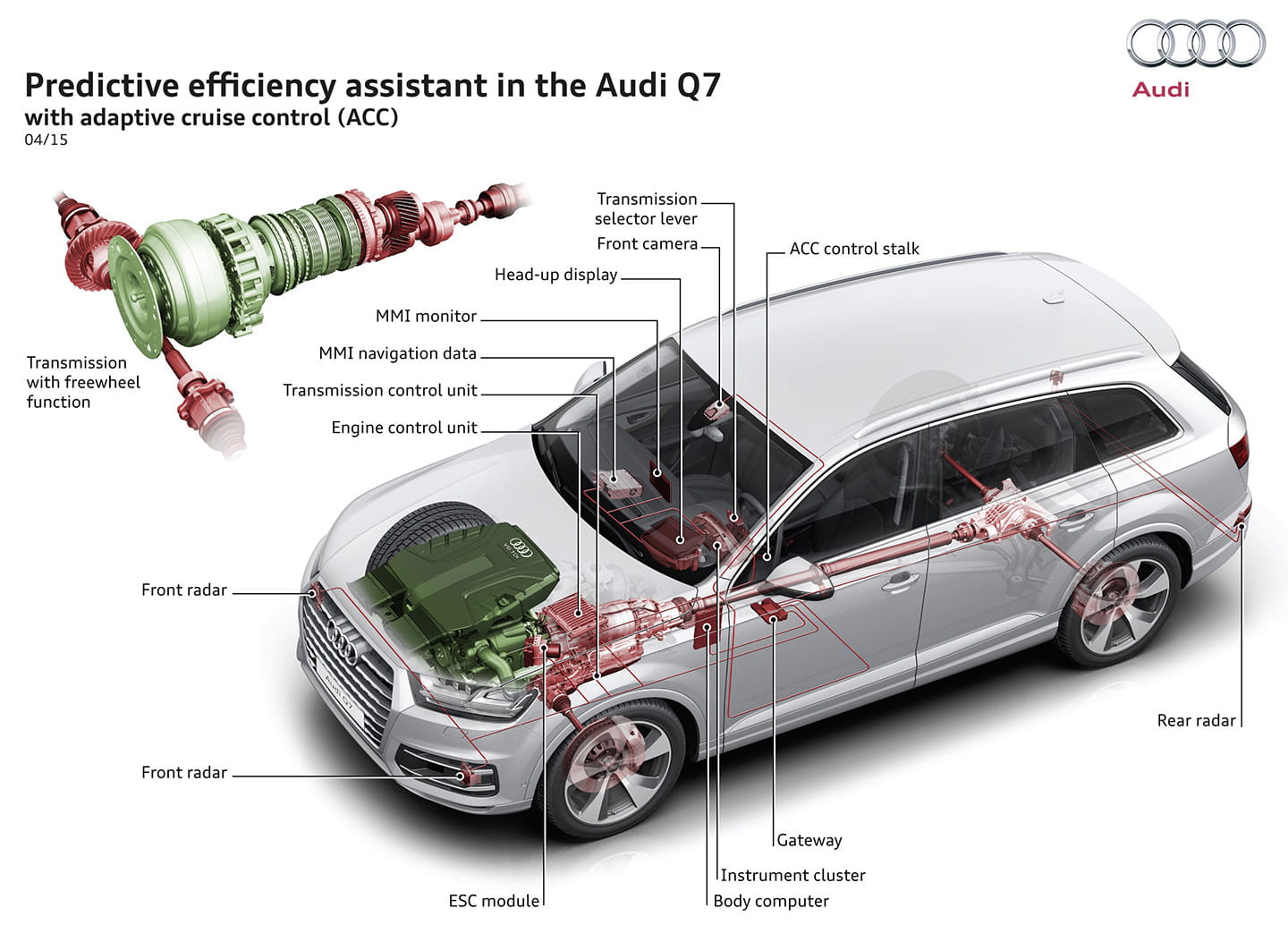
http://www.abc.es/motor-reportajes/20150820/abci-audi-tunel-viento-201508201341.html Audi presenta el[i]asistente predictivo de eficiencia[/i] – Conseguirá reducir en un 10% el consumo en condiciones de carretera
– Se presenta de momento para el A4 y Q7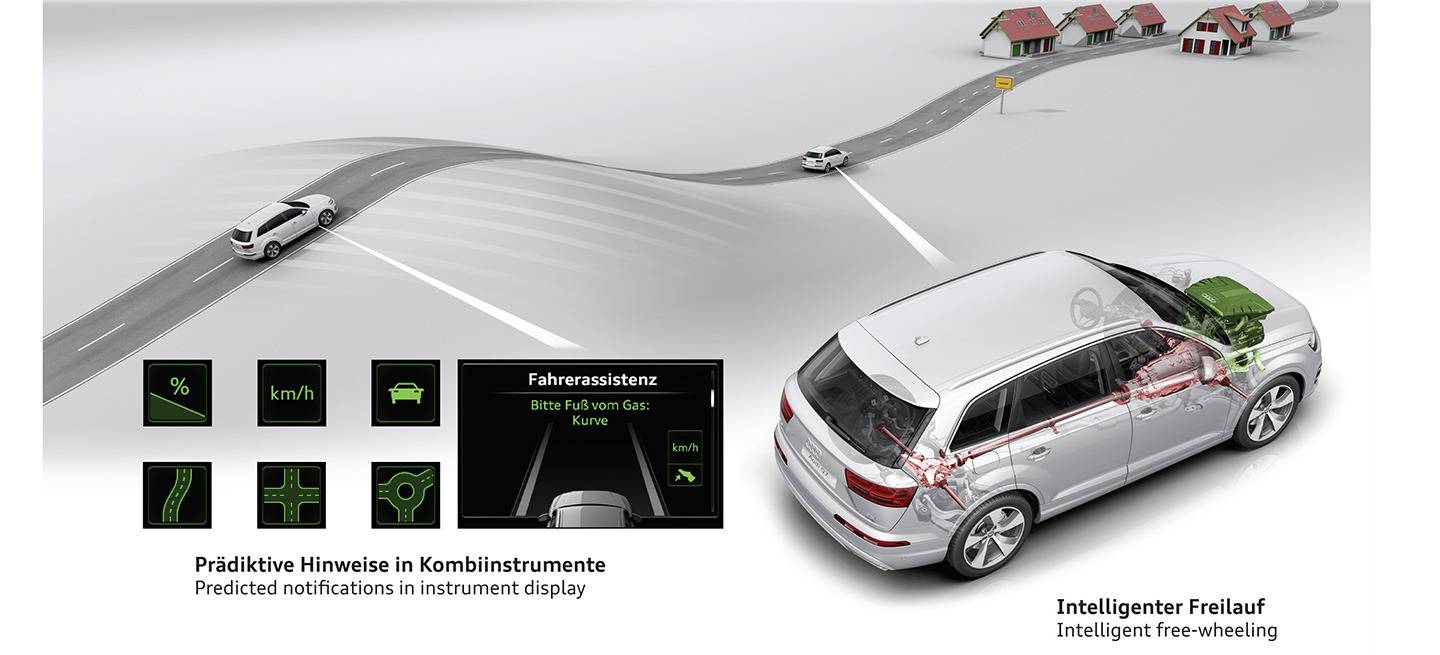
http://www.diariomotor.com/imagenes/picscache/1440x655c/asistente-eficiencia-audi-02_1440x655c.jpg
http://www.diariomotor.com/imagenes/2015/08/asistente-eficiencia-audi-01.jpg ¿En qué consiste?
recurre a la información almacenada en su sistema de navegación para que nuestra velocidad se adapte a la ruta y optimice al máximo nuestro consumo.Al activar el control de crucero adaptativo, nuestro Audi irá adaptando la velocidad no solo a la presencia de otros vehículos en la carretera, sino también a la orografía del terreno y los límites de velocidad. De manera que el coche sea capaz de anticiparse a “obstáculos” que requieren reducir la velocidad, haciendo que esa reducción se produzca de manera progresiva y en la medida de lo posible sin utilizar los frenos, antes incluso de que sean visibles para el conductor.
Cuando hablamos de obstáculos nos referimos a curvas, glorietas, intersecciones, entradas o salidas de poblaciones y límites de velocidad. Obstáculos que también condicionarán la entrada en funcionamiento del sistema de conducción a vela, que desconecta automáticamente la transmisión (en unidades con cambio tiptronic) para evitar pérdidas por arrastre y dejar que el vehículo retenga menos para mantener su velocidad. Esta desconexión automática solo se activará si el asistente de eficiencia detecta que permanecerá activo durante al menos cinco segundos.
Audi también anuncia que este sistema predictivo informará al conductor del porcentaje de las pendientes, la proximidad de curvas, rotondas, intersecciones o nuevos límites de velocidad, en la instrumentación del Audi virtual cockpit y el Head-Up Display, si el vehículo cuenta con esta opción. Y eso es otro punto interesante para ayudarnos a hacer una conducción más intuitiva y segura, especialmente en carreteras de montaña o vías de circunvalación.
http://www.diariomotor.com/2015/08/25/asistente-predictivo-de-eficiencia-de-audi/ SEAT DESTINARÁ 3.300 MILLONES A EQUIPOS, INSTALACIONES E I+D ENTRE 2015 Y 2019 SEAT destinará 3.300 millones de euros entre 2015 y 2019 a equipos, instalaciones y proyectos de I+D. El presidente del Comité Ejecutivo de SEAT, Jürgen Stackmann, ha realizado el anuncio durante la visita del presidente del Gobierno, Mariano Rajoy, a las instalaciones de la empresa automovilística en Martorell. Rajoy ha visitado SEAT en el marco del 40 aniversario del Centro Técnico de la empresa, acompañado por el Dr. Francisco Javier García Sanz, vicepresidente mundial de Compras del Grupo Volkswagen y presidente del Consejo de Administración de SEAT, y por Jürgen Stackmann.
Stackmann ha explicado que “los 3.300 millones se destinarán a impulsar nuevos proyectos de I+D para el desarrollo de vehículos en el Centro Técnico de SEAT y a equipos e instalaciones en la fábrica de Martorell”. Esta partida, la mayor de la historia de SEAT para nuevos modelos, se traducirá, de momento, en el lanzamiento de cuatro nuevos vehículos en los próximos dos años. “Estos modelos forman parte de un ambicioso plan para seguir fortaleciendo la marca e impulsando las ventas, que crecen de manera ininterrumpida desde el año 2013. El gasto en innovación asegura la competitividad, el empleo y el futuro”. El primer modelo de esta ofensiva de SEAT que llegará a los concesionarios, en el primer semestre del próximo año, será un SUV compacto, que supondrá el estreno de la marca en este segmento y que el presidente del gobierno Mariano Rajoy pudo probar en las instalaciones de Martorell.
http://www.seatfansclub.com/2015/09/seat-destinara-3300-millones-equipos.html [size size=150]Volkswagen trucó sus coches para evitar los límites a las emisiones[/size] -El grupo alemán tendrá que someter medio millón de vehículos a revisión en EE UU y se enfrenta a una sanción multimillonaria
-La multa puede ascender a 18.000 millones de dólares.La agencia que en Estados Unidos se encarga de la protección del medioambiente acusa al grupo Volkswagen de haber hecho trampa al instalar en sus vehículos de manera deliberada un programa informático diseñado para evitar los límites a las emisiones. La compañía alemana está obligada a modificar el sistema, lo que le forzará a hacer una llamada a revisión que afectará a 482.000 modelos Volkswagen y Audi.
El programa se instaló en algunos vehículos diésel vendidos entre 2008 y 2015, de acuerdo con la nota en la que se detalla la acción contra el grupo automovilístico. El sistema era capaz de detectar cuando el vehículo era sometido a la prueba oficial de emisiones. El dispositivo se encendía en ese momento y hacía un control completo de las emisiones de humo, pero se apagaba en condiciones normales de circulación.
Los modelos que deberán pasar ahora por el taller son las versiones cuatro cilindros del Jetta, Beetle, Audi A3 y Golf, además de los Passat que de 2014 y 2015. La agencia calcula que estos coches emiten hasta 40 veces más contaminantes que los indicados por la normativa, por eso se considera una “violación muy seria” de la Clean Air Act. “Es ilegal y una amenaza para la salud pública”, valora el regulador.
El grupo alemán podría hacer frente a una multa máxima de 37.500 dólares por cada vehículo, lo que elevaría el total a 18.000 millones. Pero desde la agencia no indican en este momento el alcance de la reprimenda. El grupo Volkswagen, por su parte, evita hacer comentarios sobre la acción de la autoridad de medioambiente en EE UU, en la que también participa el Estado de California.
Los títulos de Volkswagen cayeron casi un 4% tras el anuncio. Las autoridades estadounidenses insisten en la importancia de que todos los fabricantes respeten la legislación en materia de medioambiente. Al mismo tiempo asegura que la acción por parte de los propietarios no debe ser inmediata, porque son seguros. Además, es legal conducirlos aunque no respetan el estándar.
La acusación de EE UU y California daña además la imagen de Volkswagen, que ofrece en sus campañas estos vehículos diesel como eficientes y respetuosos con el medioambiente. El dispositivo que llevan instalado, como denuncian los reguladores, los hacía más limpios de lo que en realidad son. El grupo alemán se limita a decir que está cooperando y debe emitir aún la llamada a revisión.
[url]http://economia.elpais.com/economia/2015/09/18/actualidad/1442597112_006058.html [/url] Me levantaste la noticia. Jejeje. Me parece algo muy grave. La verdad es que hay que ser necio, intentar engañar a una gente como son los americanos, que cuando les da con algo…
Pues la cosa sigue. Volkswagen ha metido mucho la pata. Winterkorn ya lo ha reconocido y veremos si dura mucho en el cargo. Un CEO Japonés ya hubiera dimitido. Este culebrón va a dar mucho de si. [size size=150]Volkswagen admite haber engañado a EE UU con la emisión de gases[/size] -Estados Unidos amenazó con prohibir la venta de nuevos modelos diesel en el país
-«Lamento haber decepcionado a nuestros clientes y a la opinión pública», asume el consejero delegadoVolkswagen, el mayor constructor de automóviles del mundo, junto con Toyota, admitió este domingo haber engañado a la agencia de Estados Unidos que se encarga de la protección del medio ambiente (EPA, según sus siglas en ingles), al instalar en varios modelos diésel de manera deliberada un programa informático diseñado para evitar los límites a las emisiones. Un portavoz del consorcio, que tiene su sede en Wolfsburg, señaló que la empresa había admitido el engaño antes las autoridades estadounidenses y que estaban en permanente contacto para solucionar el problema.
Poco después, el presidente de la junta ejecutiva de VW, Martin Winterkorn se vio obligado a declarar que la firma había iniciado una intensa investigación para descubrir el origen del engaño y pidió disculpas por la falta cometida, que puede convertirse en un verdadero desastre para la empresa. “Personalmente, lamento profundamente haber decepcionado a nuestros clientes y a la opinión pública”, señaló. “Los sucesos tienen para la junta ejecutiva de VW y para mi, personalmente, una prioridad absoluta”, añadió.
La Agencia de Protección del Medio Ambiente estadounidense denunció el viernes pasado que VW había manipulado un programa informático que se instaló en unos 500.000 modelos diésel de la marca Volkswagen y Audi, que fueron vendidos entre los años 2008 y 2015. Los modelos que deben ser revisados son las versiones de cuatro cilindros del Jetta, Beetle, Audi 3, Golf y Passat. Según un comunicado dado a conocer por la Agencia, estos modelos emiten hasta 40 veces más contaminantes que lo permitido. “Es una violación muy seria, es ilegal y una amenaza para la salud”, señaló el regulador.
Este anuncio llegó dos meses después de que la EPA enviara a VW un carta, fechada el 8 de julio, avisándole de que si no modificaba el sistema no le permitirían vender los nuevos modelos diésel en Estados Unidos.
[size size=150]Una multa de 37.500 dólares por coche vendido[/size]
El engaño diseñado por los ingenieros de Volkswagen y que fue admitido este domingo por el principal ejecutivo del consorcio puede acabar con la carrera de Winterkorn y, si no existe un acuerdo extrajudicial, el grupo alemán puede hacer frente a una multa máxima de 35.700 dólares por cada vehículo, lo que elevaría la multa que tendría que pagar VW a un total de 18.000 millones de dólares (unos 16.000 millones de euros). La más alta indemnización que ha pagado nunca una empresa alemana en Estados Unidos.Por el momento, la EPA, cuyo departamento de supervisión dirige con mano de acero, Cynthia Giles, una licenciada de Harvard que trabajo durante años como fiscal, no ha señalado si llevara al gigante alemán ante los tribunales. En un gesto conciliatorio admitió que le corresponde a la empresa llevar a cabo un proceso destinado a reparar el sistema de escape de los automóviles.
La rama de olivo ofrecida por la jefa de EPA fue aceptado por Martin Winterkorn este domingo, quien declaró que Volkswagen no toleraría ninguna violación a las leyes de cualquier tipo. “Estamos trabajando con las autoridades competentes en forma conjunta y de manera global con el fin de esclarecer los hechos de manera rápida y transparente”, dijo Winterkorn.
[size size=150]La salida de Piech[/size]
Pero el principal ejecutivo de Volkswagen no tuvo palabras para explicar las razones que impulsaron al grupo a engañar a las autoridades que se encargan de proteger el medio ambiente en Estados Unidos. Este pecado volvió a revivir la lucha fraticida que vivió el consorcio en el mes de abril pasado, cuando, el expresidente del Consejo de Vigilancia de VW, Ferdinand Piëch, admitió, desde las paginas de la revista Der Spiegel que se “había distanciado de Winterkorn”, un comentario destinado a criticar la gestión del primer ejecutivo de la empresa en Estados Unidos.¿Estaba enterado Piëch del engaño que había la empresa en Estados Unidos? La guerra acabo con la salida del patriarca de Volkswagen, pero ahora, el desastre que está viviendo el grupo alemán en Estados Unidos, puede acabar con la carrera de Martin Winterkorn. ¿Estaba enterado el actual CEO de VW de la manipulación que se llevó a cabo en los coches que se vendieron en el mercado estadounidense?.
“Todo el proceso es peligroso y su dimensión no se puede predecir”, señaló Ferdinand Dudenhöffer, quizás el mayor experto en el ramo. “Lo único cierto es que será muy caro”, añadió.
[url]http://economia.elpais.com/economia/2015/09/20/actualidad/1442770050_488315.html [/url] Es curioso que a días de haber terminado el culebrón con Suzuki, VAG aparezca en la palestra nuevamente en otro caso polémico. Además, anuncian la cancelación de la DSG 10 velocidades. Y que no volverán a vender diesel en USA ni nuevos ni usados, después de las campañas y caravanas de tdi que recorrían el país de costa a costa.
La avaricia de las ventas, la guerra con Toyota y GM por ser el líder, la presión por vender y vender cueste lo que cueste, los objetivos imposibles, aunque sea falseando datos….
Son muchos frentes los que tienen, como las acusaciones de Dumping para machacar sobre todo a Fiat y PSA
La multa es de órdago: 18.000 millones de dólares.
VW perdía un 20 % en la bolsa de Frankfurt. Los pequeños accionistas estarán contentos.
Pretenden arrasar con todo y que no haya competencia. Es su ADN.
Dicho lo cual, me gustaría saber si en el Estado más Pijo-Progre del mundo, ha tenido algo que ver la influencia del Lobby car de Cupertino y Sillicon Valley.
Mas allá de que obviamente hay algo mas que un «error» de VAG en esto, es claramente una estrategia comercial que de tan agresiva se saltaron todas las normas pero nunca hay que dejar de recordar que el tema de los combustibles y su calidad en EEUU forma parte de una estrategia proteccionista de su industria. Que no digo que esté mal, pero no hay que dejar de recordarlo. Bueno, esta es una madeja muy enredada, sin duda hay intereses cruzados, tanto empresariales como políticos. A los yankies les gusta mucho esto.
Ya por lo pronto las otras alemanas se han puesto el parque antes de la herida.
El problema inmediato, aparte de la multa, lo tiene VW con los stocks en EEUU. Que harán… a saber.





- Regístrate para acceder al foro, puedes hacerlo siguiendo el botón "Regístrate" en el final de la página.